

If you are getting started with lino printing, choosing an ink can feel confusing. Water-based, oil-based and safe-wash inks all have their place, but the names do not always make it clear which one will suit your project.
In this guide, we explain the differences in simple terms, including what each type is useful for, how it cleans up and what to consider when printing on paper or fabric. Whether you are making your first prints or trying a different ink, it will help you choose with more confidence.
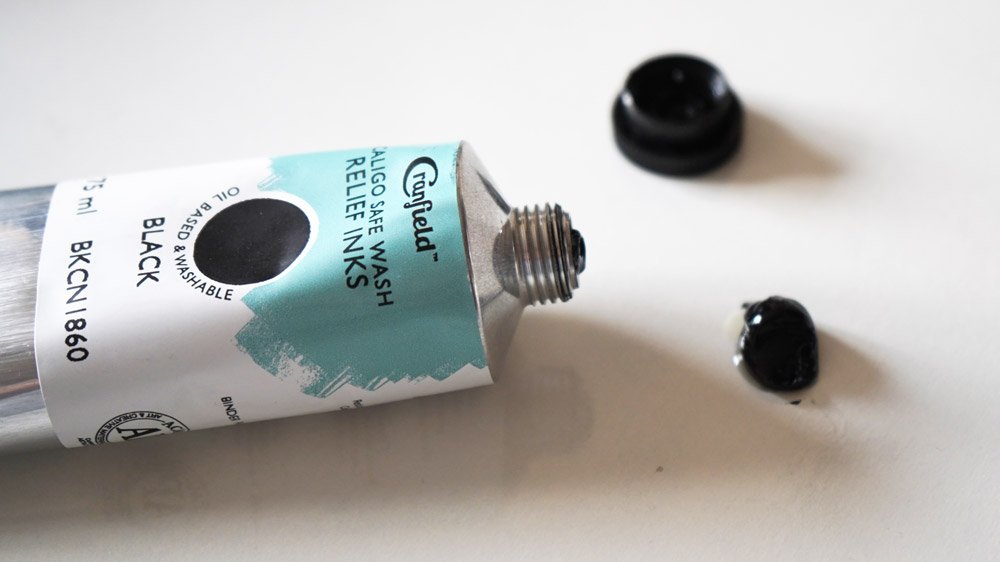
One useful thing to know is that safe-wash ink can still be oil-based. Caligo Safe Wash Relief ink, for example, is an oil-based ink that washes off tools with soap and cold water. The name describes the easier cleanup. You can read more about it in Cranfield’s product information.

Caligo Safe Wash Relief offers oil-based handling with soap-and-water cleanup.
Table of Contents
A quick comparison
Here is a simple overview to help you narrow down the options. The sections below explain each type in more detail.
| Ink type | A good choice for | Bear in mind |
|---|---|---|
| Water-based paper ink | Getting started, practising and making proof prints. | Check the drying time and clean your tools before the ink dries on them. |
| Traditional oil-based relief ink | Paper prints where you prefer a premium finish. | Allow time for prints to dry and check which cleaners the ink needs. |
| Safe-wash oil-based relief ink | Paper printing with an oil-based ink that cleans up with soap and water. | Easier cleanup does not mean faster drying. |
| Fabric block-printing ink | Printing on suitable cloth bags, clothing and other textiles. | Follow the instructions for drying, heat setting where required, and washing. |
Water-based ink for paper
Water-based ink is a useful place to start if you are new to lino printing. Our Essdee water-based lino printing inks are a budget-friendly option for practising and making prints on paper. Start with one colour so you can get used to rolling out the ink and printing your design.
If you want to print on fabric, choose a fabric ink instead. Essdee’s standard paper-printing ink can wash out of cloth, while its fabric range is made for that job. See Essdee’s advice on choosing an ink for more information.
Oil-based and safe-wash inks
Oil-based relief inks are another option for paper printing. If you like using them but want simpler cleanup, a safe-wash formula may suit you. Caligo Safe Wash Relief is still oil-based, but you can clean it from your tools with liquid soap and cold water.
To clean up, remove the excess ink first, work liquid soap into what is left, then wipe and rinse as directed in Cranfield’s cleaning instructions. Leave enough time for your prints to dry before adding another colour or stacking them.
Check that you are buying relief ink for your lino or woodblock project. Etching ink is made for a different printing method, even when it comes from the same brand. If you need to adjust an ink, use the maker’s recommended products and instructions.
Choosing ink for fabric
For cloth bags, T-shirts or other washable projects, choose a fabric block-printing ink. The instructions vary between brands, so check the tube before you start. For example, Speedball’s Fabric Block Printing Ink does not need heat setting, while some other fabric inks do.
Try the ink on a spare piece of the same fabric first. Let it dry, follow any setting instructions and test the washed result before printing the whole batch. This helps you check both the appearance and how well the print holds up.
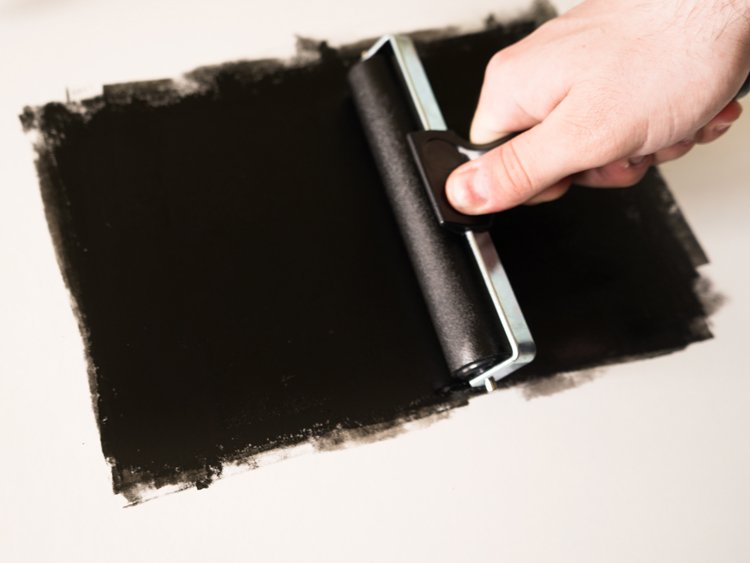
Use a small proof to assess the ink film and transfer before printing the edition.
Which ink is right for your project?
- For your first paper prints: Start with one water-based colour and a simple design.
- For an oil-based ink with easier cleanup: Consider a safe-wash relief ink and allow enough drying time.
- For several colours: Plan where each layer will dry before printing the next one.
- For clothing or cloth bags: Choose fabric block-printing ink and follow its setting and washing instructions.
Once you find a combination you like, make a note of the ink and paper you used. It will make it easier to get similar results next time.
Browse our lino printing inks and printing papers to find materials for your project. For help getting started, read our guide to inking your block or find out how long lino-printing ink takes to dry.