
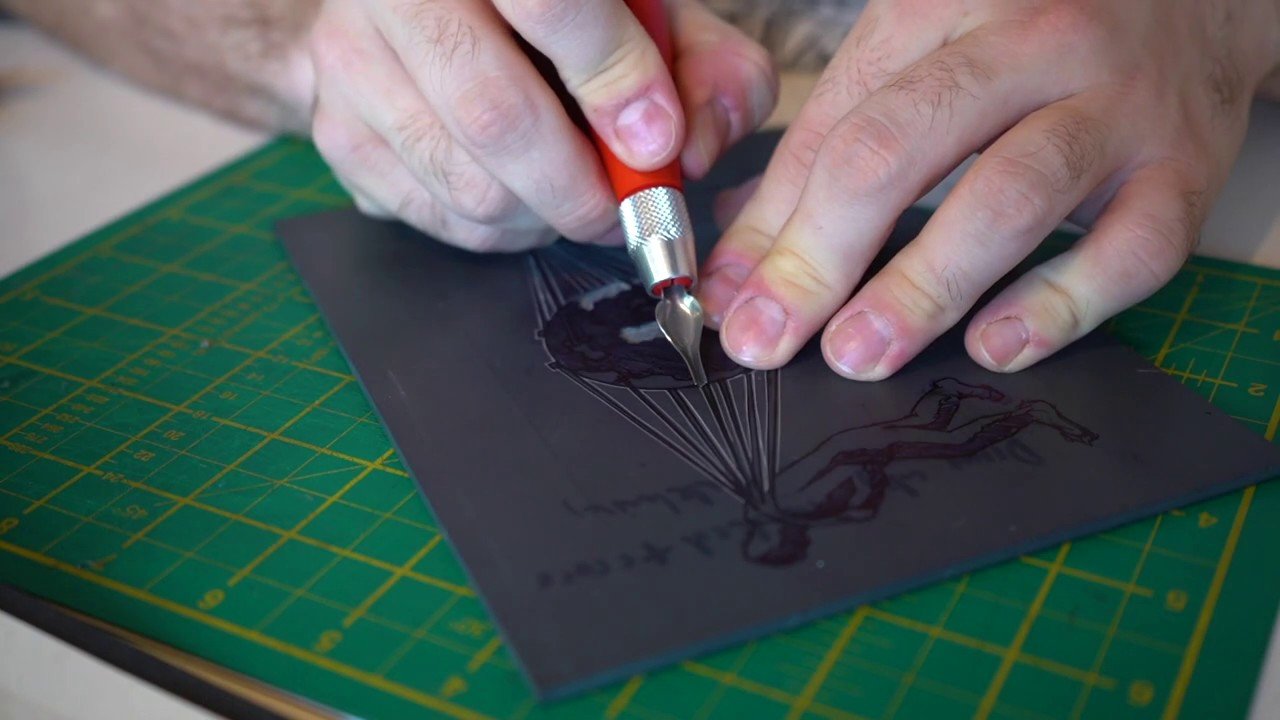

If your goal is crisp lines, cleaner edges, and more control in smaller marks, the type of lino you carve makes a real difference. Softer materials can be helpful when you are starting out, but they are not always the best choice for intricate lino printing work. For detailed carving, many printmakers prefer firmer materials that give better feedback through the tool and hold fine lines more cleanly.
In most cases, traditional grey lino is still one of the best choices for detailed carving. It has a firmer feel, which helps with control, and it is often better at holding sharp edges than very soft carving blocks. Japanese printmaking vinyl can also be an excellent option, especially if you want a smooth, consistent surface and better visibility while carving. If you are comparing different lino blocks for printing, both materials can work very well for fine detail. Paired with fine lino cutting tools, they can help you achieve much more precise results.
Table of Contents
What makes lino good for detailed carving?
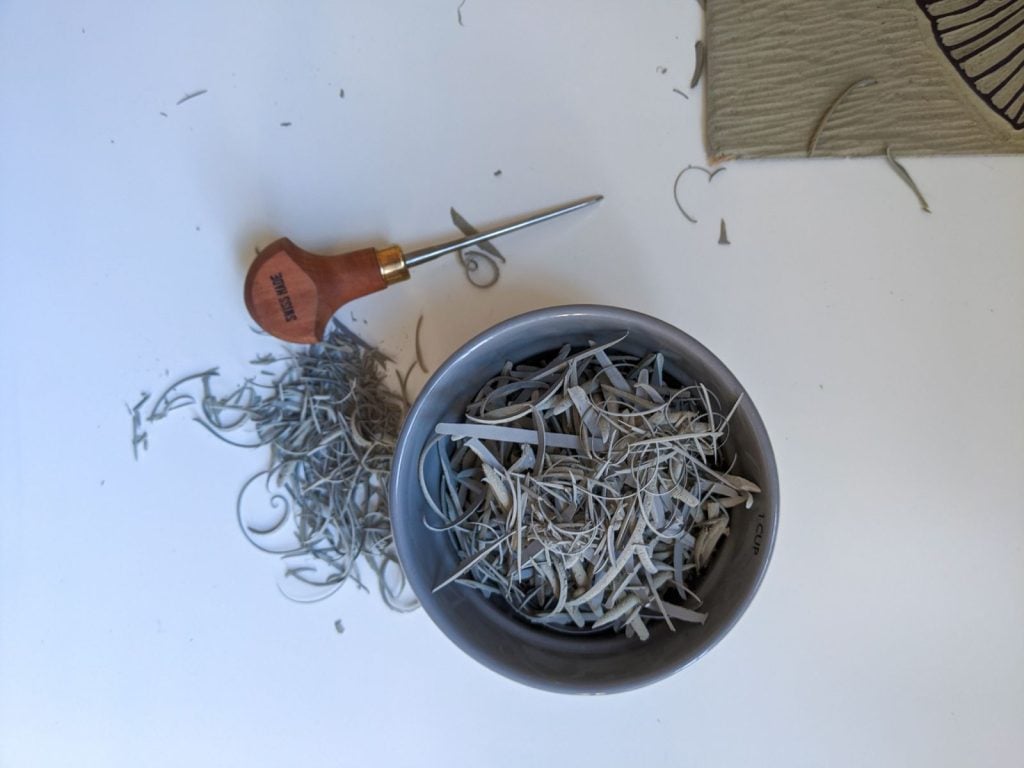
Detailed carving is less about what is easiest to cut and more about what gives you the most control. When you are carving fine lines, small textures, or intricate shapes, the material needs to respond in a predictable way.
The best lino for fine detail usually has these qualities:
- firm enough to resist the tool slightly rather than feeling spongy
- smooth and even across the surface
- able to hold narrow cuts and sharp corners clearly
- predictable when carving curves, outlines, and repeated marks
A material that is too soft can sometimes feel easier at first, but it may not give the same clean edge or precise finish when you want very detailed work.
Is soft-cut lino good for fine detail?
Soft-cut lino and other soft carving blocks can still be used for detail, but they are not usually the first choice for very precise carving. Their main advantage is ease. They take less pressure to cut, which is why they are often recommended in guides on the best lino for beginners.
The trade-off is that softer materials can sometimes feel less controlled when carving narrow lines or very small shapes. Because the material gives way more easily, the tool can feel slightly less stable, especially if you are trying to carve clean corners, fine outlines, or tight detail.
That does not mean soft-cut lino is poor quality. It just suits a different job. If your designs are bold, graphic, and simple, it can work very well. If your aim is cleaner, more intricate carving, a firmer material is often the better fit.
Why traditional grey lino is still one of the best choices for detail
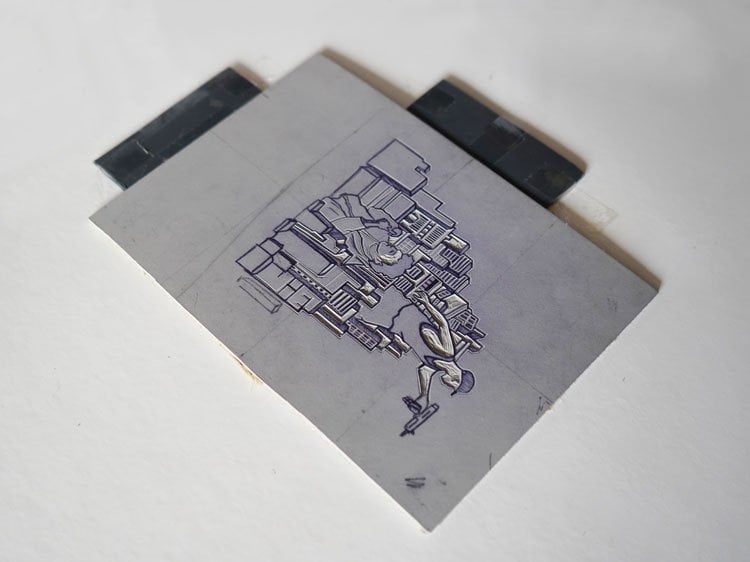
Detailed linocut carved by Hickman Design on traditional grey Essdee lino
Traditional grey lino remains a favourite with many printmakers for a reason. It has more resistance than soft carving blocks, and that extra resistance often gives better control rather than making the carving harder in a bad way.
For detailed carving, traditional grey lino is often one of the best options because:
- it gives clearer feedback through the tool
- it helps you guide cuts more carefully
- it tends to hold sharp edges well
- it suits fine lines and controlled mark making
When you are carving detail, the tool should not feel like it is sliding too freely. A slightly firmer surface can help you slow down, steer more accurately, and make more deliberate cuts. That is why many artists move from soft-cut materials to traditional lino once they want sharper results.
Traditional grey lino is especially good for printmakers who want to build more control and produce more refined work over time.
Is Japanese printmaking vinyl good for detailed carving?
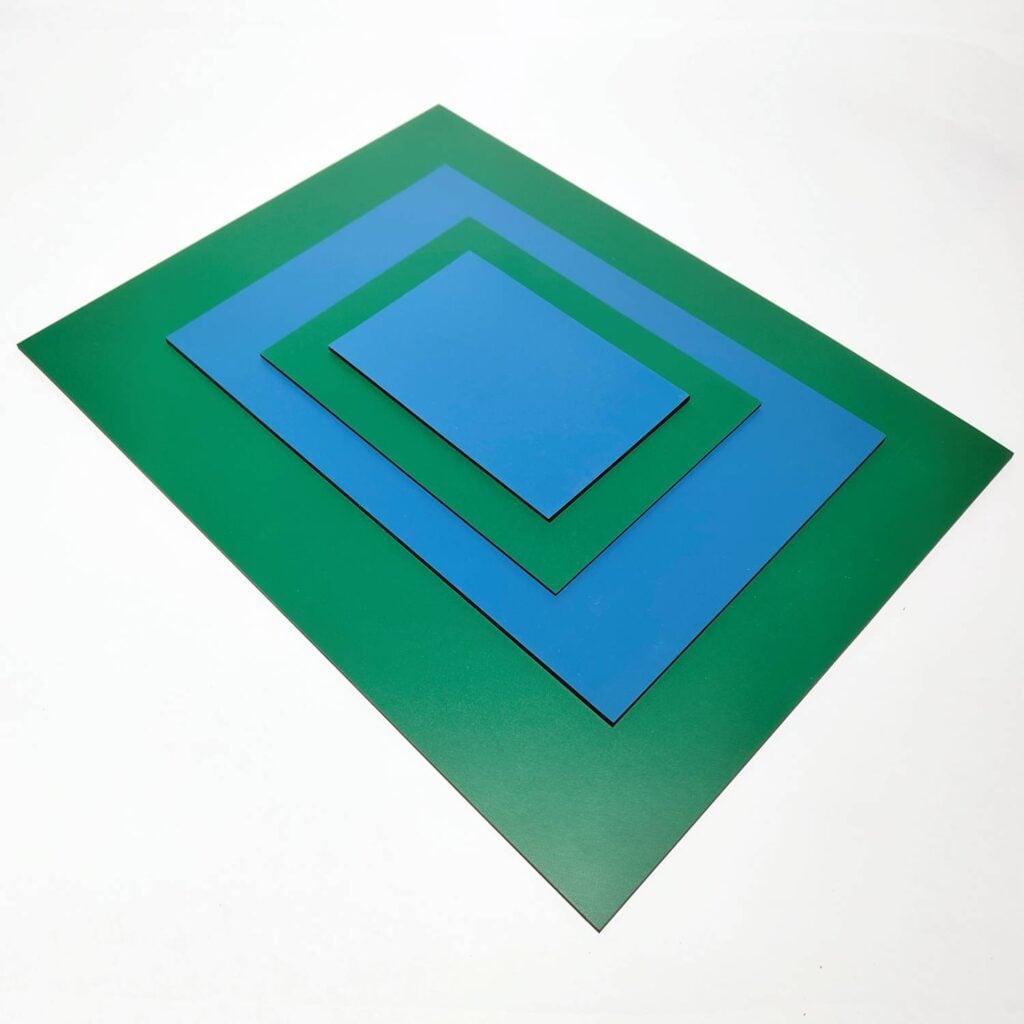
Yes, Japanese printmaking vinyl can be an excellent choice for detailed carving. It offers a smooth and consistent surface, and many printmakers like it for precision work.
One of the helpful features of some Japanese vinyl blocks is the coloured surface coating, often blue or green, with a darker layer showing where the material has been carved away. This makes the carved areas easier to see, which can be especially useful when you are working on fine detail, narrow lines, or more complex designs.
Japanese printmaking vinyl can be a strong option if you want:
- a smooth carving surface
- good visibility while carving
- consistent control across the block
- clean, accurate results
For some artists, it feels like a more modern and convenient alternative to traditional grey lino, while still being capable of holding fine detail very well.
Traditional grey lino vs Japanese printmaking vinyl for fine detail
Both materials can work well for detailed carving, but they feel slightly different.
Traditional grey lino is often the best choice if you want a more classic carving feel with a firmer response under the tool. It suits printmakers who like that extra resistance and want strong control over each cut.
Japanese printmaking vinyl is often the better choice if you want a very smooth surface and the added benefit of a coloured coating that makes carved areas more visible. This can be especially useful when you are working on detailed sections and need to see your progress clearly.
In simple terms:
- choose traditional grey lino for a firmer, classic feel and crisp control
- choose Japanese printmaking vinyl for smooth carving, consistency, and better visual clarity while working
The best lino cutting tools for detailed work
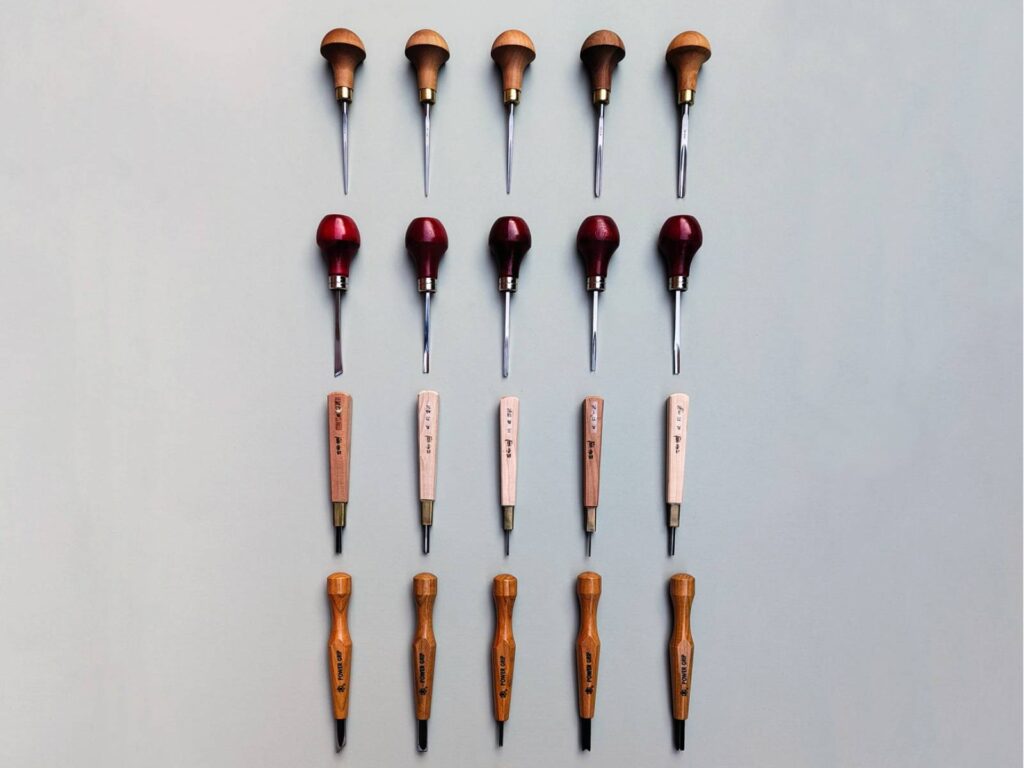
Different Fine Lino Cutting Tools Compared
Even the best lino for detailed carving will only take you so far if the tools are too broad, too blunt, or difficult to control. Fine detail depends just as much on the cutting tools as the material itself.
For detailed carving, it helps to use:
- fine V gouges for narrow lines
- small U gouges for tight areas and textures
- narrow straight tools for careful edge work
- sharp, well-made carving tools that feel stable in the hand
Using good fine lino cutting tools makes it much easier to carve small marks without tearing the surface or losing accuracy. Sharpness matters too. A sharp tool cuts more cleanly and predictably, which is especially important when working on intricate designs.
If you are building a better setup for detailed work, it is worth looking at your wider lino printing equipment as well as the block itself.
What to avoid when carving very fine detail
If you want cleaner detailed results, a few common problems are worth avoiding.
Very soft carving blocks can sometimes make fine edges feel less crisp. Blunt tools can drag rather than cut cleanly. Rushing small sections can also lead to slips or wider cuts than intended.
It also helps to avoid choosing lino purely because it is marketed as easy. Easy to carve does not always mean best for precision. For intricate work, control is usually more important than softness.
Final thoughts: which lino is best for detailed carving?
If you want the best lino for detailed carving, traditional grey lino is still one of the strongest overall choices. It offers excellent control, holds fine detail well, and suits printmakers who want sharper, cleaner carved results.
Japanese printmaking vinyl is also a very good option, especially if you prefer a smooth carving surface and like the visibility of coloured surface layers that make carved areas easier to see.
If you are mainly doing simple, bold designs, soft-cut lino can still be useful. But for fine detail, firmer materials usually give better results.
So in most cases, the best choice looks like this:
- Best overall for detailed carving: traditional grey lino
- Best alternative for smooth, precise carving: Japanese printmaking vinyl
- Best for ease rather than fine detail: soft-cut lino
And whichever material you choose, pairing it with sharp, well-made fine lino cutting tools will make a big difference to the result.