

Starting lino printing is exciting, but one of the first things that confuses beginners is the lino itself. There are several types, and they do not all feel the same to cut or print. Some are soft and easy to carve, while others are firmer and better for crisp detail. The best choice depends on what kind of beginner you are, what tools you have, and what you want your first prints to look like.
For most beginners, the easiest place to start is soft-cut lino or soft carving block. It takes less pressure to cut, feels more forgiving, and helps you focus on learning the basics without fighting the material. Traditional grey lino is still excellent, but it usually suits beginners a little better once they have made a couple of simple prints and want more control and sharper results.
Table of Contents
Quick answer: What is the best lino for beginners?
If you want the simplest answer, softcut lino is usually the best lino for beginners. It is easier to carve, takes less pressure, and feels more forgiving when you are still learning how to control the tool.
That said, traditional grey lino is often the better next step once you want cleaner detail, firmer resistance, and a more classic linocut feel. Some beginners also enjoy Japanese printmaking vinyl because it can feel smooth and precise while still being easier to carve than harder traditional lino.
The best choice depends on whether you want the easiest possible first experience, or whether you are happy with a slightly steeper learning curve in exchange for more control.
What beginners usually mean by “lino”
When people say “lino”, they often mean any block used for linocut printing. In reality, there are a few common options:
- Traditional grey lino
- Softcut lino
- Rubber-style carving blocks
- Vinyl-style relief blocks
They all work for relief printing, but they behave differently under the tool. That is why one beginner might love lino printing straight away, while another struggles simply because they started with a material that did not suit them.
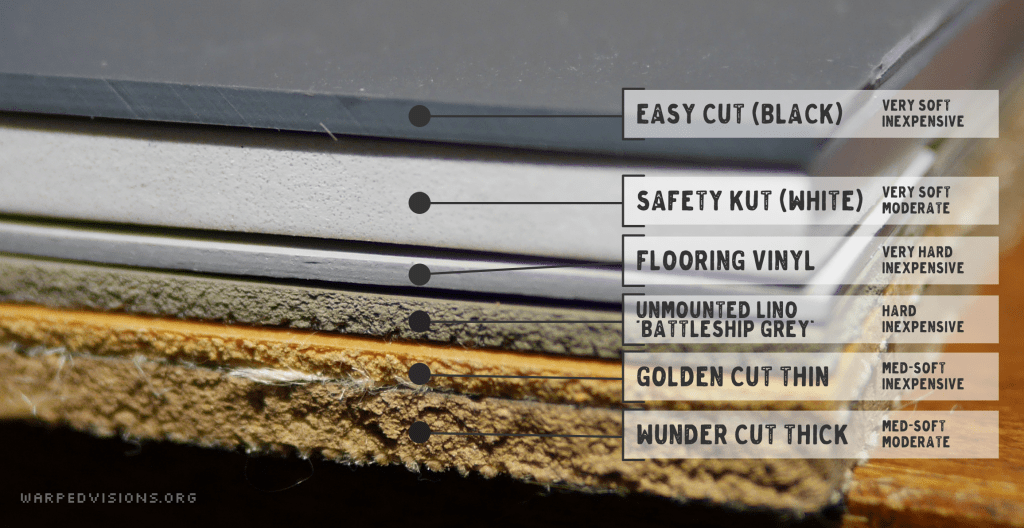
Read more about the types of Lino for Printing by warpedvisions.org
Which beginner lino is best for different projects?
The best lino for beginners is not always the same for every project. Some materials are better for simple practice prints, while others are more suited to clean detail, fabric printing, or repeat work.
As a general guide:
- For greetings cards and simple one-colour prints: softcut lino is usually the easiest place to start.
- For stamps and small bold designs: soft rubber carving blocks are often the most forgiving.
- For cleaner lines and more detailed carving: traditional grey lino is often the better long-term choice.
- For a smoother, more controlled carving feel: Japanese printmaking vinyl can be a strong middle ground.
- For fabric printing: softer blocks or vinyl-style materials can work well, depending on how detailed the design is and how you plan to print. You can read more about the best lino for fabric printing here.
This is why beginners sometimes get different advice. The right lino depends not just on skill level, but also on what you actually want to make.
The best lino for most beginners
1. Softcut lino
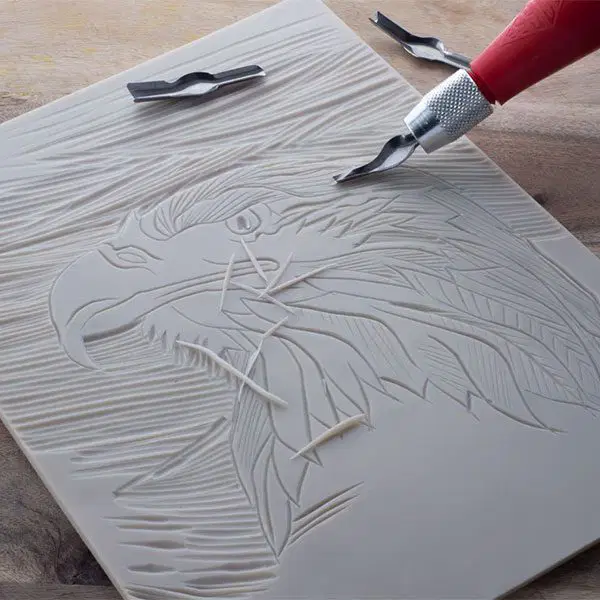
Softcut Lino by Essdee
Softcut is often the best starting point for beginners because it is designed to be easier to carve than traditional lino. It is softer under the blade, easier on the hands, and usually less intimidating for first-time users. Essdee describes SoftCut as being made to be extremely easy to carve and suitable for less experienced artists, while still holding a fine line and giving a sharp print.
Why it is good for beginners:
- Easier to cut with less pressure
- Good for simple shapes and bold designs
- Less tiring on the hands
- Usually easier to draw on because of the lighter surface
Things to know:
- It can feel slightly springy or elastic
- Some beginners find it harder to end a cut neatly at first
- Very fine detail can feel less precise than traditional lino
Jackson’s Art notes that Softcut is easier to carve than grey lino, but its elasticity means you may need to lift the tool more deliberately at the end of a line. That is worth knowing so you do not think you are doing something wrong.
2. Soft rubber carving blocks
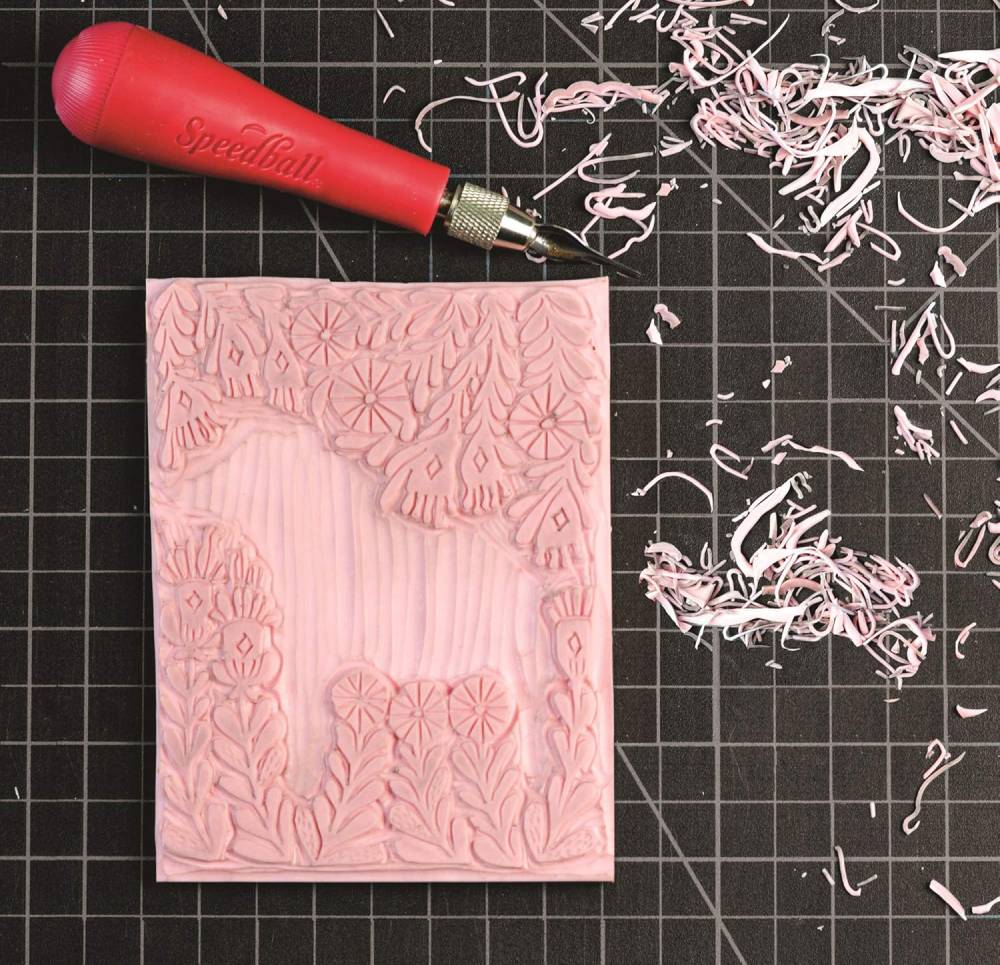
Speedy Carve Block by Speedball
Rubber-style blocks, such as Speedy-Carve or similar products, are another beginner-friendly option. They are very soft and easy to carve, which makes them popular for classrooms, stamps, and simple first prints. Speedball says Speedy-Cut blocks are especially suited to young students or beginners.
Why beginners like them:
- Very easy to carve
- Great for quick projects
- Good for stamps and bold graphics
- Less chance of struggling with the material
Things to know:
- They may not feel like “real lino”
- Some softer blocks are less suited to very detailed or large prints
- Certain types are recommended only for water-soluble inks
These blocks are a good confidence-builder, but if you know you want to develop traditional linocut skills, you may eventually want to move on to traditional grey lino as well.
3. Japanese printmaking vinyl
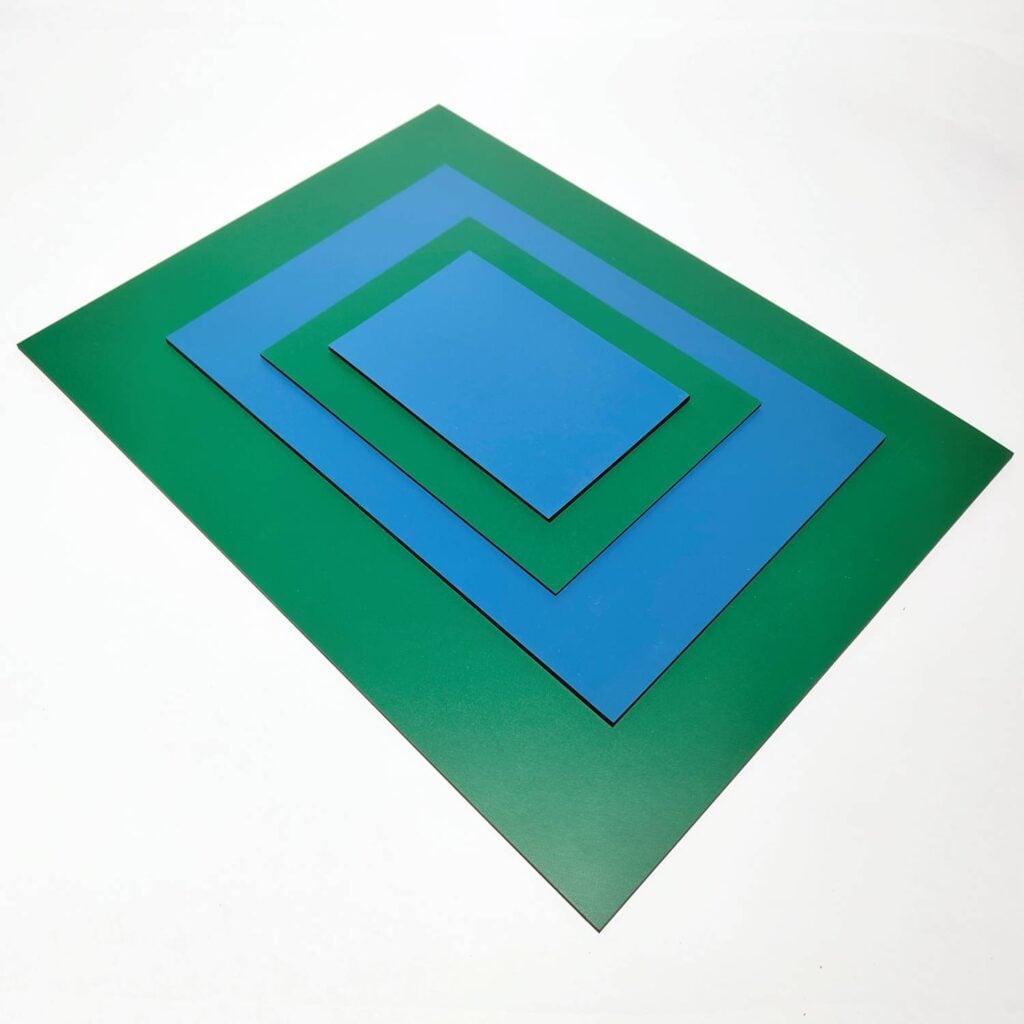
Another option worth knowing about is Japanese printmaking vinyl. This is a smooth carving material used for relief printmaking that many artists like because it can hold clean detail while still being easier to carve than some traditional lino.
For beginners, Japanese printmaking vinyl can be a good middle ground between very soft carving blocks and traditional grey lino. It is often smoother and more consistent to cut, which can help if you want neater lines without needing as much pressure as harder lino.
Some Japanese printmaking vinyls also come with a blue or green coloured coating. When you carve into the surface, the cut areas show up darker underneath, which makes it much easier to see where you have already carved. This is especially useful for beginners, as it helps you follow your design more clearly while you work.
If your goal is to make simple prints and learn the basics, softcut is still often the easiest starting point. But if you want something that feels precise, clean, and comfortable to carve, Japanese printmaking vinyl is another strong option to consider.
Is Japanese printmaking vinyl good for beginners?
Yes, Japanese printmaking vinyl can be a very good option for beginners, especially if you want something that feels smoother and more controlled than very soft rubber blocks.
It often sits somewhere between softcut lino and traditional grey lino. It can be easier to carve than harder traditional lino, but still capable of holding neat lines and a clean printed image. For some beginners, that makes it a more satisfying material once they want a little more precision.
Another reason it appeals to beginners is visibility. Some Japanese vinyls have a coloured top surface, often blue or green, and the carved areas show darker underneath. That makes it much easier to see where you have already cut, which can help reduce mistakes and make the carving process feel less confusing.
It may not always be the cheapest starting option, but it is definitely worth considering if you want a carving material that feels clean, consistent, and beginner-friendly.
When traditional grey lino becomes the better choice
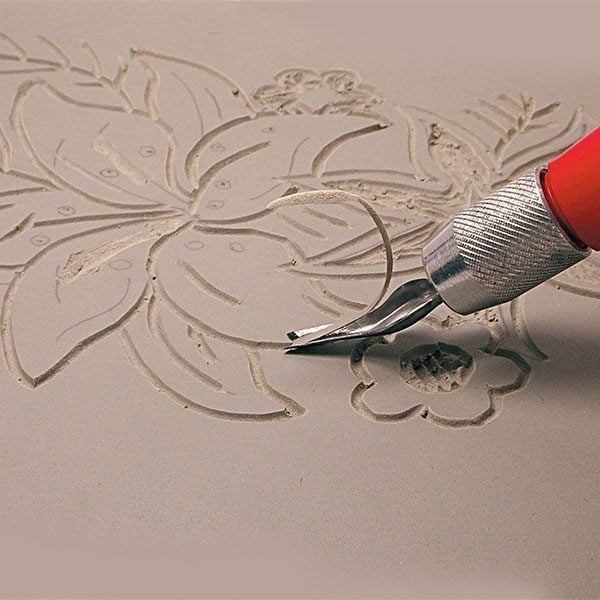
Essdee Battleship Grey Lino Sheets
Traditional grey lino is the material many printmakers stay with long term. It is firmer, flatter, and often gives a very satisfying cut. Fresh traditional lino is not the dry, crumbly school lino many people remember. Handprinted notes that fresh grey lino should be flexible rather than brittle, and that old lino is what tends to become crumbly.
Why people love it:
- Crisp, clean cut lines
- Better control for detailed work
- Stays flatter during printing
- Good for repeat printing and press use
Things to know as a beginner:
- It needs more pressure to carve
- Cold lino can feel harder
- It can be less forgiving if your tools are blunt
Essdee points out that traditional lino is harder to carve than softer alternatives, but it stays flat and stands up well to repeated use in a press. Handprinted also says fresh traditional grey lino carves beautifully and has a distinctive “snap off” feel at the end of a cut, which many printmakers really like.
What matters more for beginners: easy carving or cleaner detail?
For most beginners, ease of carving matters more at the start. If the material feels too hard or awkward, it is much easier to lose confidence before you have even learned the basics of tool control.
That is why softer materials are often recommended first. They help you focus on the movement of the tool, the direction of your cuts, and the basic logic of relief printing without fighting the block.
However, cleaner detail becomes more important once you start caring about sharper edges, finer marks, and more controlled printed results. This is where traditional grey lino often starts to feel more rewarding. It asks a little more from you, but it can give a more precise result in return. Read more in our guide to the best lino for detailed carving.
So if you are choosing between a softer block and a firmer one, the real question is this: do you want the easiest possible start, or do you want to begin learning on a material that may give more control later on?
Softcut lino vs traditional lino: which should you buy first?
Here is the simplest answer:
Buy softcut lino first if:
- you are completely new
- you want an easier first experience
- you have weaker hands or do not want to push hard
- your first designs will be simple and bold
Buy traditional grey lino first if:
- you want to learn on the classic material
- you want crisp detail from the start
- you already have decent tools
- you do not mind a slightly steeper learning curve
For most true beginners, softcut is the safer first buy. For beginners who already know they want to take printmaking seriously, traditional lino is also a very good option, especially if they understand that fresh lino is much nicer to carve than old stock.
Is mounted lino better for beginners?
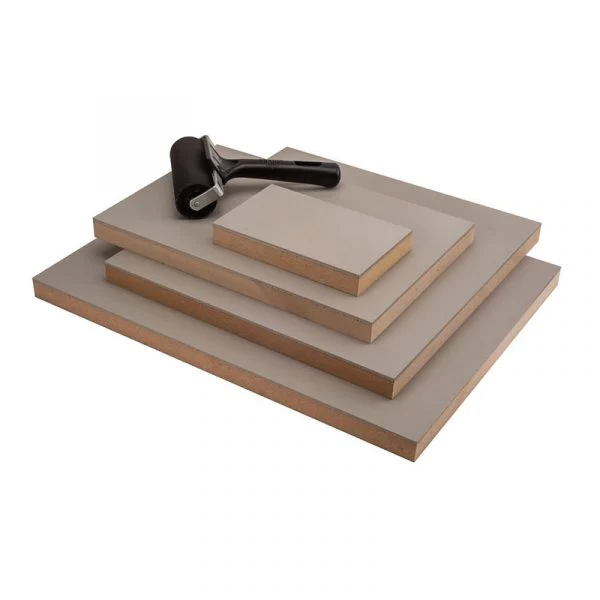
Essdee Mounted Lino Printing Blocks
Mounted lino means the lino is fixed to a board. Unmounted lino is just the sheet or block on its own.
For beginners, unmounted lino is usually the better choice because it is cheaper, simpler, and easier to store. Mounted lino can be useful if you want a firmer base or plan to use certain printing setups, but it is not essential when learning. The important part is choosing a lino that feels manageable to carve, not making your setup more complicated than it needs to be.
Mounted lino can also be useful if you prefer the feel of a more rigid block in the hand, or if you are working in a setup where the extra support helps keep things stable. Even so, most beginners do not need that added structure straight away. Unmounted lino is usually enough for learning, experimenting, and making first prints without adding extra cost.
Please note that with mounted lino blocks, you will need to adjust the roller height if you are using a printing press, as the backing board increases the overall height of the lino.
The easiest lino to carve
If your main concern is ease of carving, the order usually looks like this:
- Very soft rubber carving blocks
- Softcut lino
- Traditional grey lino
That does not mean the softest option is always the best overall. Sometimes very soft materials can feel less controlled, especially when you want neat edges or cleaner detail. This is why some people begin on softcut, then move to traditional lino once they are more confident.
The best lino for simple beginner designs
If you want to make:
- greetings cards
- simple one-colour prints
- stamps
- bold shapes
- easy practice pieces
then softcut lino is usually the best fit.
If you want to make:
- more detailed prints
- cleaner fine lines
- larger edition prints
- prints using a press
then traditional grey lino is often the better long-term choice.
What beginners often get wrong when buying lino
Buying old lino
Old lino can become dry and crumbly, which makes carving much less enjoyable. Beginners often blame themselves when the real problem is the material. Fresh lino should feel more workable.
Choosing detail-heavy lino before learning tool control
A harder, firmer lino can be brilliant, but it may slow you down if you are still getting used to holding and guiding the tool.
Starting with a design that is too small
Tiny details are harder on any material. A bold design is usually a better match for a first print.
Using blunt tools
Even the best lino feels hard if the tools are not sharp. Material choice matters, but so does the cutting tool.
Another common mistake is choosing a material based only on what someone else recommends, without thinking about the kind of print you want to make. A beginner making bold greetings cards may enjoy softcut much more than traditional lino, while someone interested in detailed edition prints may prefer to learn on a firmer material sooner. The best beginner lino is not just about what is easiest. It is about what makes sense for your first projects.
So, what is the best lino for beginners?
If you want one clear recommendation:
Best overall for beginners: Softcut lino
It is easy to carve, beginner-friendly, and helps you enjoy the lino printing process quickly. It is a strong choice for first prints, cards, and simple linocut designs.
Best for beginners who want to grow into more detailed printmaking: Traditional grey lino
Fresh traditional lino offers better control and a more classic linocut feel. It takes more effort, but many printmakers prefer it once they get past the first learning stage.
How to choose the right beginner lino for you
If you are still unsure, the easiest way to choose is to think about what matters most to you:
- If you want the easiest carving experience, start with softcut lino.
- If you want the softest and most forgiving option for simple projects, try a soft rubber carving block.
- If you want a smoother carving feel with good visibility and neat lines, consider Japanese printmaking vinyl.
- If you want to learn on the more traditional material and do not mind a bit more resistance, choose fresh traditional grey lino.
There is no single perfect lino for every beginner. The best choice is the one that makes the process feel manageable and enjoyable enough that you want to keep printing.
Final thoughts
The best lino for beginners is the one that makes you want to keep going. If carving feels too hard at the start, try softcut. If you want a more traditional experience and do not mind a little resistance, choose fresh grey lino. Neither option is wrong. The important thing is to begin with a material that suits your confidence level and first project.
A simple, bold design on a beginner-friendly block will usually teach you more than a complicated design on the “perfect” material. Start simple, learn how the tool moves, and you will quickly get a feel for what kind of lino you enjoy most.
Quick answer section
What lino is easiest for beginners?
Softcut lino or a soft carving block is usually the easiest because it needs less pressure to carve.
Is traditional lino too hard for beginners?
Not always. Fresh traditional lino is much better than old crumbly lino, but it does take more effort than softcut.
What lino gives the cleanest detail?
Traditional grey lino usually gives cleaner, more controlled detail once you are comfortable using the tools.
Should beginners use rubber blocks instead of lino?
They can. Rubber blocks are very easy to carve and great for learning, but they do not always feel the same as traditional lino.
Does the best lino for beginners depend on your tools?
Yes, it often does. Even the best beginner lino can feel difficult if your tools are blunt, poorly shaped, or uncomfortable to hold.
A softer material like softcut lino is often easier for beginners using basic starter tools because it needs less pressure and is more forgiving if your technique is still developing. Traditional grey lino can feel much harder if the tools are not sharp enough, which is one reason some beginners assume they have chosen the wrong material.
Hand strength matters too. If your hands tire easily, or you simply want carving to feel smoother and less physical, softer lino or vinyl-style materials may be a better place to start. If you have sharper tools and do not mind a little more resistance, traditional lino can feel much more controlled and satisfying.
This is why lino choice should never be looked at on its own. The material, the sharpness of the tools, and your confidence level all affect how beginner-friendly the experience feels.