
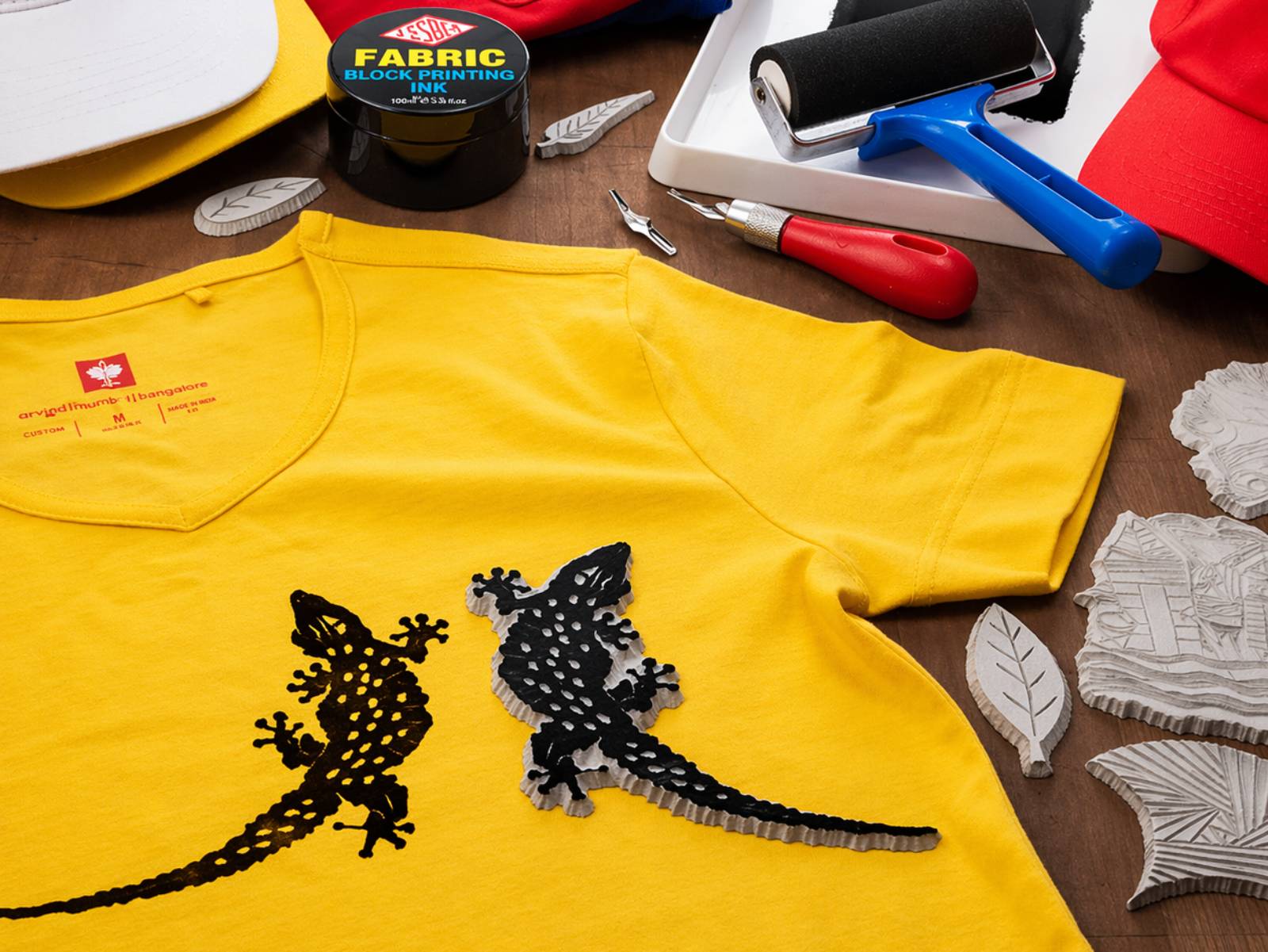

If you want the best lino for fabric printing, the answer is slightly different from choosing lino for paper prints. Fabric has more texture, more give, and usually needs a bolder, more practical approach. The lino still matters, but so do the firmness of the block, the type of design, and the ink you use.
For most fabric printing projects, the best options are usually traditional grey lino blocks for printing, firm printmaking vinyl, or in some cases mounted lino. These tend to give cleaner, more reliable results on fabric than very soft carving materials, especially if you want to repeat the same print several times.
Table of Contents
What makes lino good for fabric printing?
When printing onto fabric, you need a block that can transfer ink evenly across a slightly textured surface. That means the best lino for fabric printing is usually one that offers:
- a firm, stable surface
- good edge definition
- durability for repeated prints
- even contact with the fabric
- enough control for bold, clean shapes
Very soft carving blocks can still work, but they are often less precise on fabric than firmer lino or vinyl.
Traditional grey lino for fabric printing
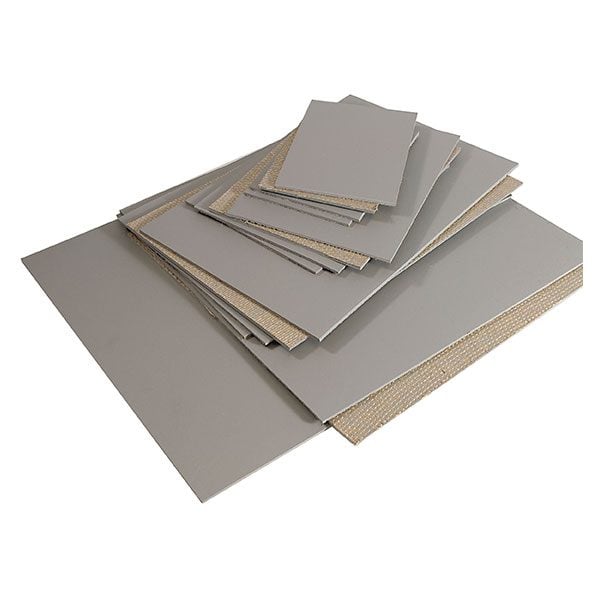
Traditional grey lino is one of the best choices for fabric printing if you want a crisp, dependable print. It is firmer than soft-cut materials, which helps it hold carved edges well and gives a more controlled print surface.
This makes it especially useful for:
- repeat textile patterns
- bold motifs
- simple lettering
- graphic shapes
- block printing onto tote bags, tea towels, or fabric panels
Traditional grey lino is often preferred when you want a cleaner, sharper result. It also stands up well if you are printing the same design multiple times.
The downside is that it takes more effort to carve than softer materials, so it may not be the easiest option for complete beginners or for anyone who wants a very soft carving feel.
Soft-cut lino for fabric printing
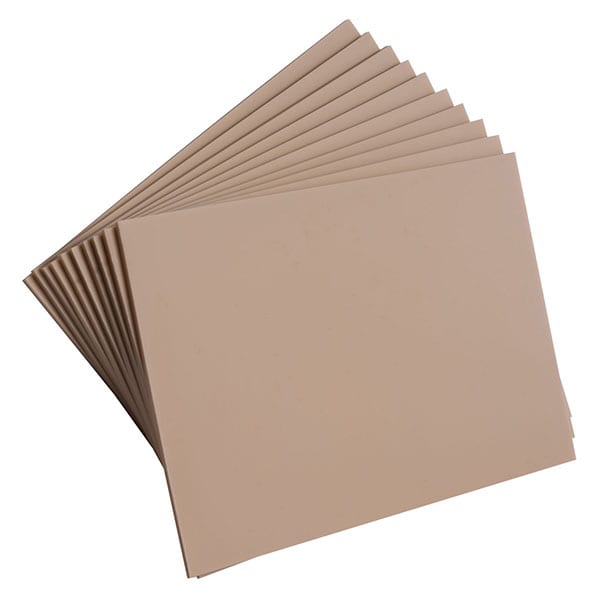
Soft-cut lino can be used for fabric printing, especially if you want something easier to carve. It is often appealing to beginners because it takes less pressure and feels more forgiving when cutting.
For fabric printing, though, softer materials can sometimes feel a little less controlled. Because fabric already has surface texture, a softer block can occasionally lead to edges looking slightly less crisp than they would with a firmer material.
That does not make soft-cut lino a poor choice. It just means it is often better suited to:
- simple shapes
- bold, playful designs
- beginner projects
- less detail-heavy textile printing
If you are printing onto fabric and want the sharpest, most repeatable result, traditional lino or firm vinyl will often perform better.
Japanese printmaking vinyl for fabric printing
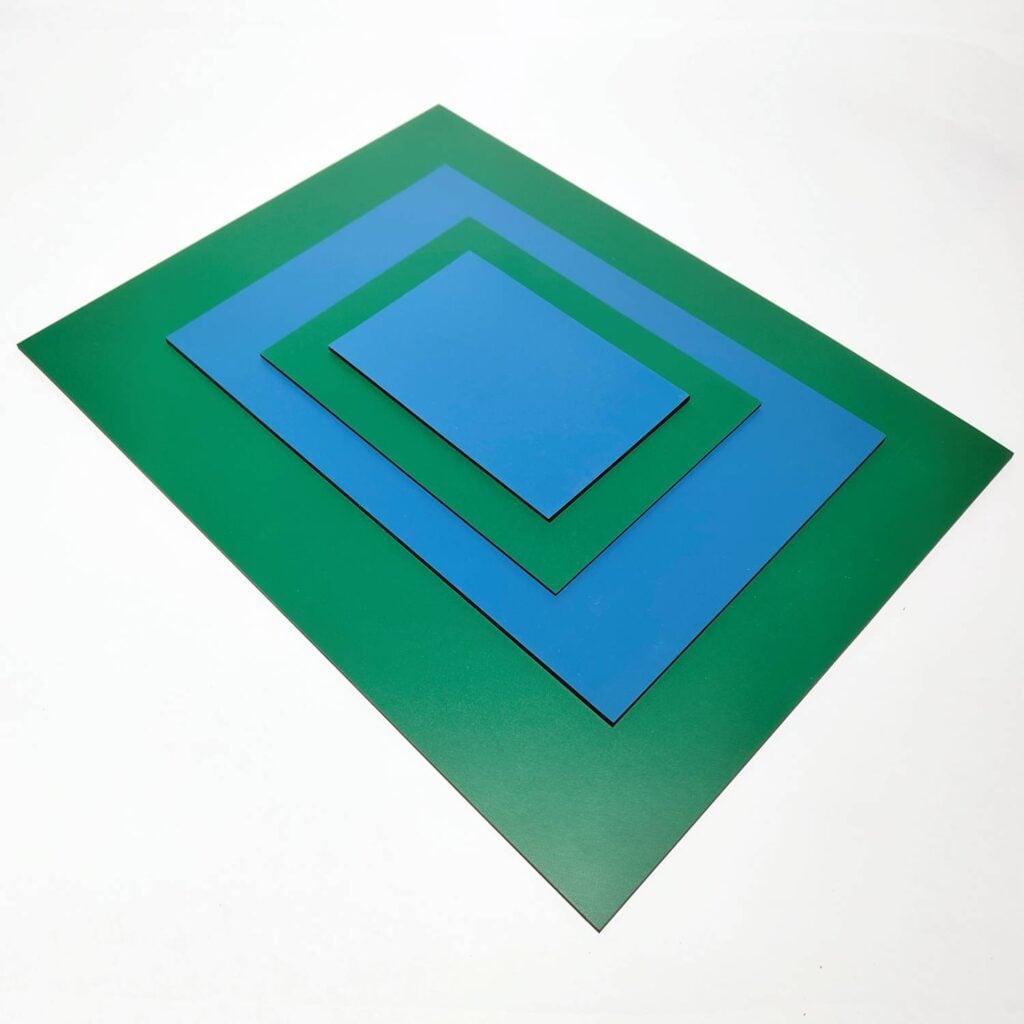
Firm Japanese printmaking vinyl is another very good choice for fabric printing. Many printmakers like it because it gives a smoother, more consistent carving experience while still holding detail well.
For fabric printing, a firmer vinyl can be an excellent middle ground between traditional grey lino and softer carving blocks. It is often easier to cut than traditional lino, but still stable enough to give clean prints on fabric.
Some Japanese printmaking vinyls also come with a coloured surface coating, often blue or green, where the carved areas show darker underneath. This makes it easier to see where you have cut, which is useful when working on more detailed block printing designs.
Firm vinyl is often a strong option if you want:
- easier carving than traditional lino
- a smooth, consistent surface
- good visibility while cutting
- reliable results for repeat printing onto fabric
Is mounted lino good for fabric printing?
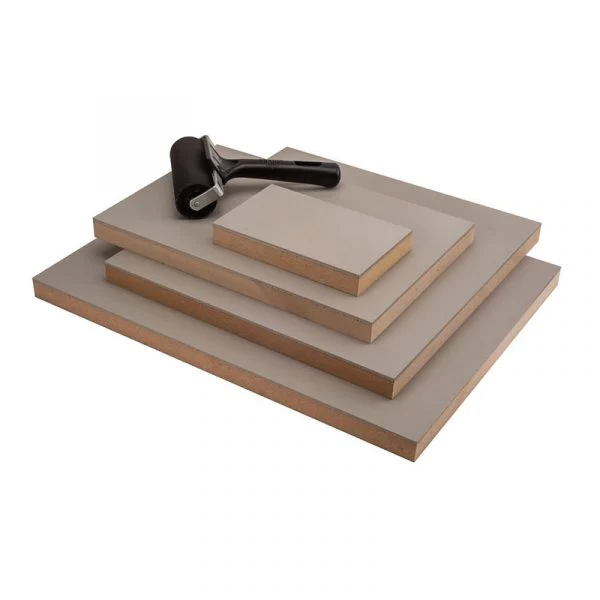
Mounted lino blocks are also worth considering for fabric printing. Because the lino is fixed to a wooden backing, it has extra support and stability, which can make hand printing feel more controlled.
That solid base can be useful when printing onto fabric, especially if you are applying pressure by hand with a baren, spoon, or similar tool. A mounted block stays flat and can feel easier to handle for smaller repeat prints or simple textile motifs.
Mounted lino is often a good choice for:
- small repeat designs
- bold motifs
- beginners who want a ready-to-use block
- printmakers who like a firmer block in the hand
The main drawback is flexibility. Mounted lino is more expensive than unmounted sheets, and you are limited to the block sizes available. If you want to cut custom sizes or make larger repeating patterns, unmounted lino or vinyl is often the more practical choice.
What is the best lino for printing onto fabric?
The best lino for fabric printing depends on what matters most to you.
If you want the best overall print quality and durability, traditional grey lino is often the strongest choice.
If you want easier carving while still keeping good control, firm printmaking vinyl is often ideal.
If you want a stable, ready-backed block for smaller prints, mounted lino is a very good option.
If you want the easiest carving experience for simple designs, soft-cut lino can still work well.
In simple terms:
- traditional grey lino for crisp, repeatable prints
- firm printmaking vinyl for easier cutting with good definition
- mounted lino for stability and practical hand printing
- soft-cut lino for simple beginner-friendly fabric designs
Fabric printing ink matters as much as the lino
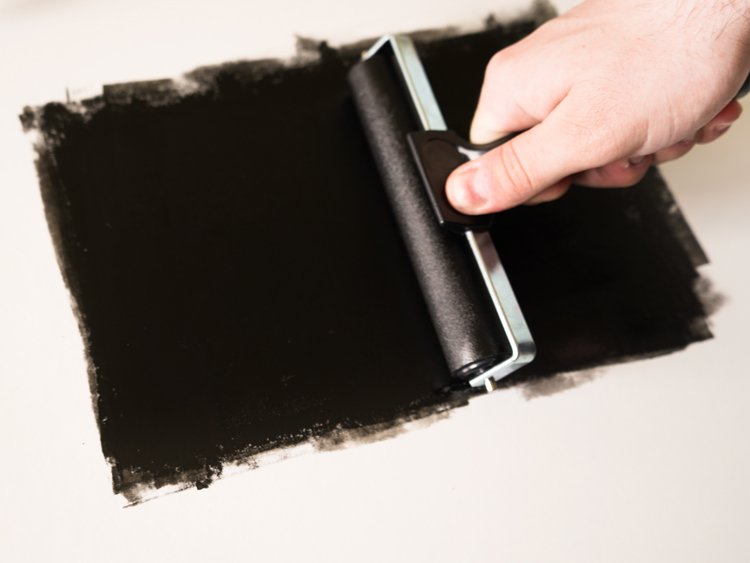
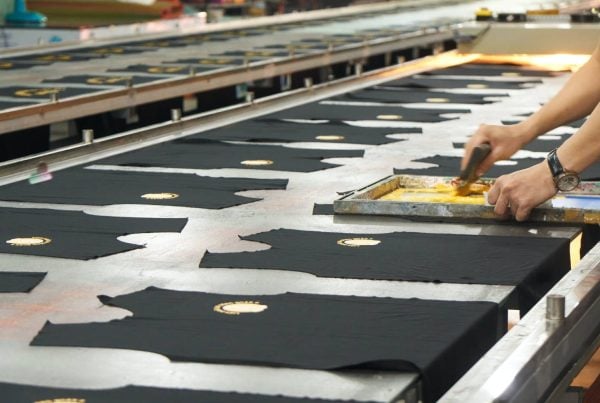
Rolling out ink for block printing onto fabric
When people search for the best lino for fabric printing, they often also need the right fabric printing ink. Even the best lino block will struggle if the ink is not suitable for textile use.
Fabric inks are made to work better with fibres and are usually designed to be heat set or fixed in some way so the print lasts better. Standard block printing inks used for paper are not always suitable if you want washable fabric results.
So if you are printing onto tote bags, aprons, tea towels, cushion covers, or clothing, the best setup is usually:
- a firm lino or vinyl block
- a bold, printable design
- a proper fabric printing ink
Best design types for block printing onto fabric
Fabric printing usually works best with designs that are slightly bolder than what you might print on paper. Because cloth has texture, very fine detail can be harder to transfer evenly.
The best designs for lino printing onto fabric are often:
- repeat patterns
- florals
- geometric shapes
- bold silhouettes
- simple lettering
- strong high-contrast motifs
If your design is very intricate, it may still carve well, but the final fabric print might not come out as cleanly as it would on smooth paper.
Final thoughts
The best lino for fabric printing is usually one that gives you stability, clean edges, and reliable repeat results. For many printmakers, that means starting with traditional grey lino, firm printmaking vinyl, or mounted lino rather than the softest carving block available.
Traditional grey lino is often best for crisp, durable textile prints. Firm printmaking vinyl is excellent if you want easier carving with strong control. Mounted lino is especially useful for smaller repeat designs where a stable backed block helps with even pressure. Soft-cut lino can still work, but it is usually better for simpler, bolder fabric prints rather than fine, highly controlled detail.
If you want the cleanest results when lino printing onto fabric, pair a firmer lino surface with a proper fabric printing ink and keep the design bold enough to suit the material.