
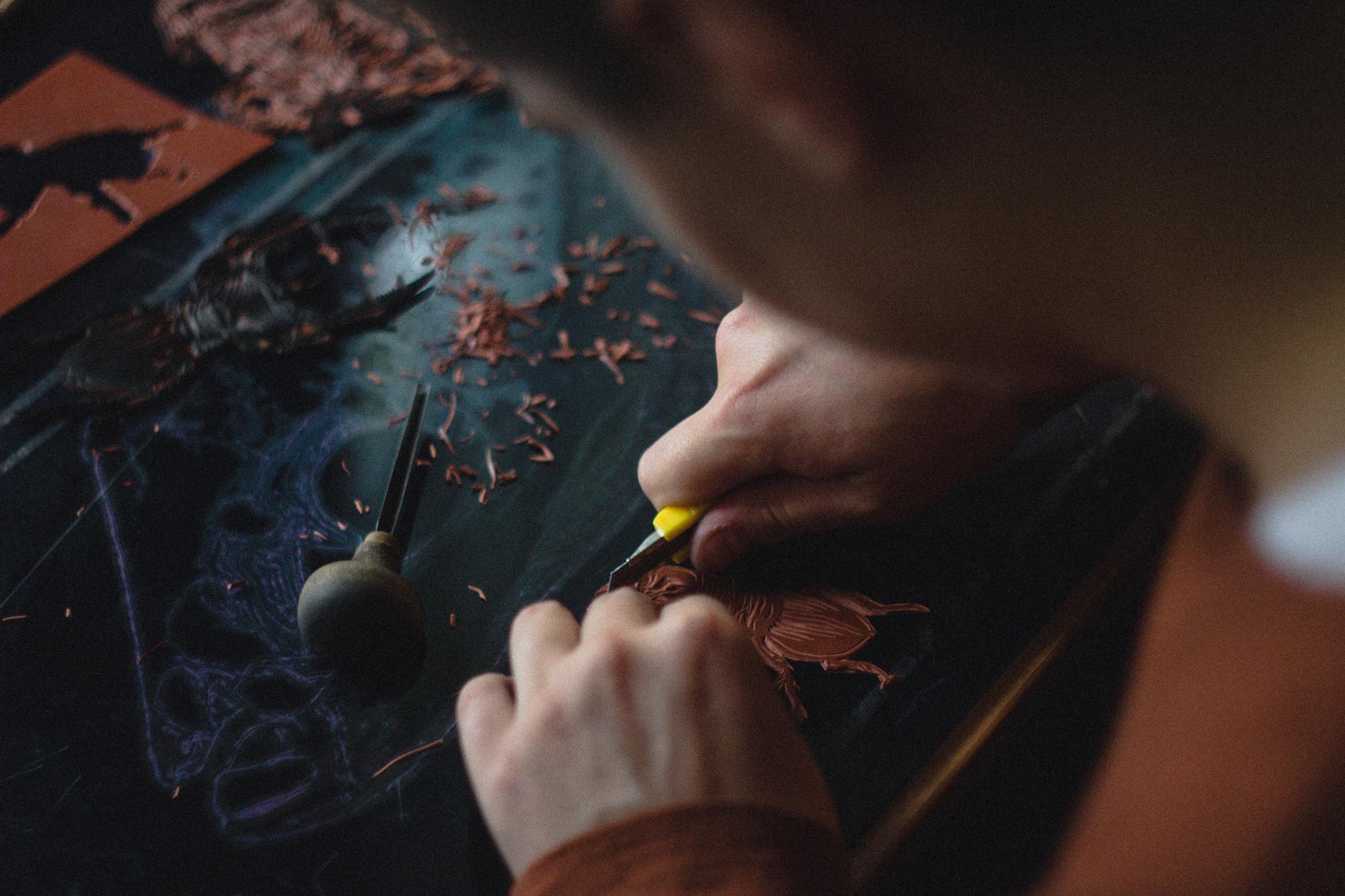

Lino printing, also known as linocut, is a form of relief printmaking where an image is carved into a sheet of linoleum and printed onto paper or fabric. The raised (uncut) areas of the surface hold ink, while the carved sections remain blank, creating a bold, graphic result when pressure is applied.
It is a technique that sits at an interesting crossroads between fine art, illustration, graphic design, and craft. Lino printing can be expressive and raw, or precise and highly controlled, depending on the artist’s approach, tools, and materials.
Unlike drawing or painting, lino printing is an indirect process. The artist creates an image in reverse, carving away material rather than adding marks. This reversal and physical engagement with the surface is one of the reasons many artists find lino printing so rewarding.
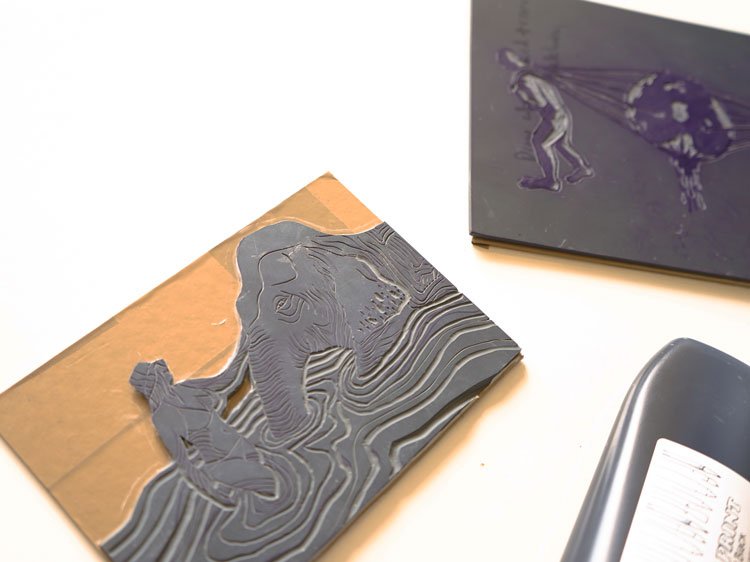
Example of a lino block with a design carved into it, leaving the raised relief surface ready for printing.
If you are unfamiliar with the terminology used in linocut and relief printing, our lino printing glossary is a useful starting point:
Table of Contents
Where Lino Printing Sits Within Printmaking
Lino printing belongs to the broader family of relief printing, alongside techniques such as woodcut and wood engraving. In relief printing, ink sits on the surface of the block rather than inside etched lines or recessed areas.
What distinguishes lino printing is the material itself. Linoleum is softer and more uniform than wood, with no grain to fight against. This makes it particularly suitable for:
- Clean, flat areas of colour
- Smooth curves and flowing lines
- Graphic and illustrative styles
Because of this, lino printing is often seen as more approachable than woodcut, while still offering professional-level results.
For a wider overview of how lino printing fits into printmaking as a whole, you may find this guide useful:
A Brief History of Lino Printing
Linoleum was originally developed in the mid-19th century as a flooring material, but artists quickly recognised its potential as a carving surface. By the early 20th century, lino printing had been adopted by artists seeking a more modern, accessible alternative to woodcut.
Unlike traditional wood engraving, linocut was not tied to centuries of academic convention. This freedom allowed artists to experiment with:
- Strong political imagery
- Social commentary
- Simplified, modernist forms
Lino printing became especially popular in the UK and Europe, both in fine art circles and in education, where it remains a staple technique.
If you are interested in how artists have used lino printing historically and contemporarily, this article explores notable figures and movements:
What Makes Lino Printing So Appealing?
Lino printing has endured not because it is easy, but because it is deeply satisfying and versatile. Some of the key reasons artists continue to choose linocut include:
A Strong Visual Identity
Lino prints are instantly recognisable. The contrast between inked and uninked areas creates images that feel bold, confident, and deliberate.
A Physical, Hands-On Process
Carving lino is tactile and engaging. The resistance of the material, combined with the feedback from sharp tools, gives artists a strong connection to their work.
Reproducibility Without Losing Character
Each print is part of an edition, yet subtle variations mean no two impressions are ever truly identical.
Adaptability Across Disciplines
Lino printing is used for:
- Fine art prints
- Illustrations and posters
- Book arts and zines
- Textile and fabric printing
Lino Printing as a Contemporary Art Form
Today, lino printing is enjoying a resurgence. Contemporary artists are pushing the medium far beyond its traditional boundaries, experimenting with:
- Large-scale prints
- Layered and multicolour work
- Hybrid digital and hand-printed techniques
Modern materials, inks, and papers have also expanded what is possible, allowing lino prints to achieve remarkable clarity, durability, and colour depth.
If you are curious about more advanced approaches, including colour separation and layered printing, this guide explores multicolour lino printing in depth:
Tools, Materials, and Craftsmanship
While this article avoids explaining how to make a lino print, it is worth noting that lino printing rewards good tools and thoughtful material choices. The quality of the cutting tools, ink, paper, and even rollers all influence the final result.

Example of common tools used in lino printing, show are a range of lino cutters.
If you want to explore equipment in more detail, these resources break things down clearly:
- https://hickmandesign.co.uk/blog/equipment/lino-printing-equipment-explained/
- https://hickmandesign.co.uk/blog/equipment/japanese-vs-european-lino-cutting-tools-whats-the-difference/
- https://hickmandesign.co.uk/blog/equipment/how-to-choose-a-lino-cutting-tool-linocut-tool-buying-guide/
Paper choice alone can dramatically affect the look and feel of a print:
Lino Printing as a Personal and Political Medium
Historically, lino printing has often been used to communicate strong ideas. Its graphic clarity makes it ideal for:
- Protest art
- Editorial imagery
- Social and political commentary
Many artists are drawn to lino printing precisely because it strips an image back to its essentials, forcing clarity of thought and intent.
You can see how this works in practice by exploring real-world lino prints from our portfolio:
- https://hickmandesign.co.uk/portfolio/lino-printing/greece-riots/
- https://hickmandesign.co.uk/portfolio/lino-printing/vietnam-war/
- https://hickmandesign.co.uk/portfolio/lino-printing/minimal-libya/
Is Lino Printing Still Relevant Today?
Absolutely. In an age dominated by digital imagery, lino printing offers something refreshingly human. The marks are intentional, the process is physical, and the results carry a sense of permanence that screens cannot replicate.
For many artists, lino printing is not about nostalgia. It is about control, restraint, and impact.
Whether used for fine art editions, illustration, or experimental work, lino printing continues to evolve while staying rooted in its core principles.
Learn More About Lino Printing
This article is designed as an introduction to what lino printing is, rather than a step-by-step guide. If you want to go deeper, you already have a comprehensive library of resources covering every aspect of the process, tools, troubleshooting, and creative development.
A good place to start is the main lino printing process hub:
From there, you can explore specific topics depending on your interests and experience level.
Final Thoughts on Lino Printing
Lino printing is more than just a printmaking technique. It is a way of thinking visually, of reducing an idea to its strongest elements and committing to each mark with intent. Whether used for fine art, illustration, or expressive experimentation, linocut encourages patience, decisiveness, and a hands-on relationship with the image being made.
What makes lino printing particularly compelling is its balance between accessibility and depth. It can be explored at a simple level, yet it continues to challenge and reward artists as their skills and ambitions grow. From bold single-colour prints to complex, layered editions, the medium remains as relevant today as it ever has been.
If you are curious to explore lino printing further, the resources linked throughout this guide offer deeper insight into its history, materials, and creative possibilities. Taken together, they form a solid foundation for understanding not just how lino printing works, but why it continues to resonate with artists across generations.