



Table of Contents
The Key Features of Game UI/UX Design
Game UI/UX design is a foundational element of modern game development. While visuals, mechanics, and storytelling often attract the most attention, it is the user interface and user experience that determine how smoothly players interact with those systems. When done well, UI/UX design fades into the background, allowing players to focus entirely on the game itself.
As games grow more complex and are released across multiple platforms, effective UI/UX design has become essential not only for usability, but for player satisfaction, accessibility, and long-term engagement.
Key Facts About Game UI/UX Design
- UI (User Interface) focuses on visual elements such as menus, HUDs, icons, and typography
- UX (User Experience) covers how players feel when interacting with the game, including learning curves, feedback, and flow
- Strong UI/UX design can improve player retention and reduce frustration
- Poor UI/UX is one of the most common reasons players abandon otherwise well-made games
- Accessibility and scalability are now industry standards rather than optional extras
Clear Information Hierarchy and Readability
One of the most important features of effective game UI design is clarity. Players often need to absorb information quickly, sometimes during intense gameplay moments. The interface must communicate essential details without overwhelming the screen.
Good readability is achieved through:
- Clear visual hierarchy that prioritises important information
- High colour contrast between text, icons, and backgrounds
- Legible typography that scales well across screen sizes
- Thoughtful spacing to prevent clutter
A clear interface reduces cognitive load, allowing players to make decisions instinctively rather than pausing to interpret the UI.
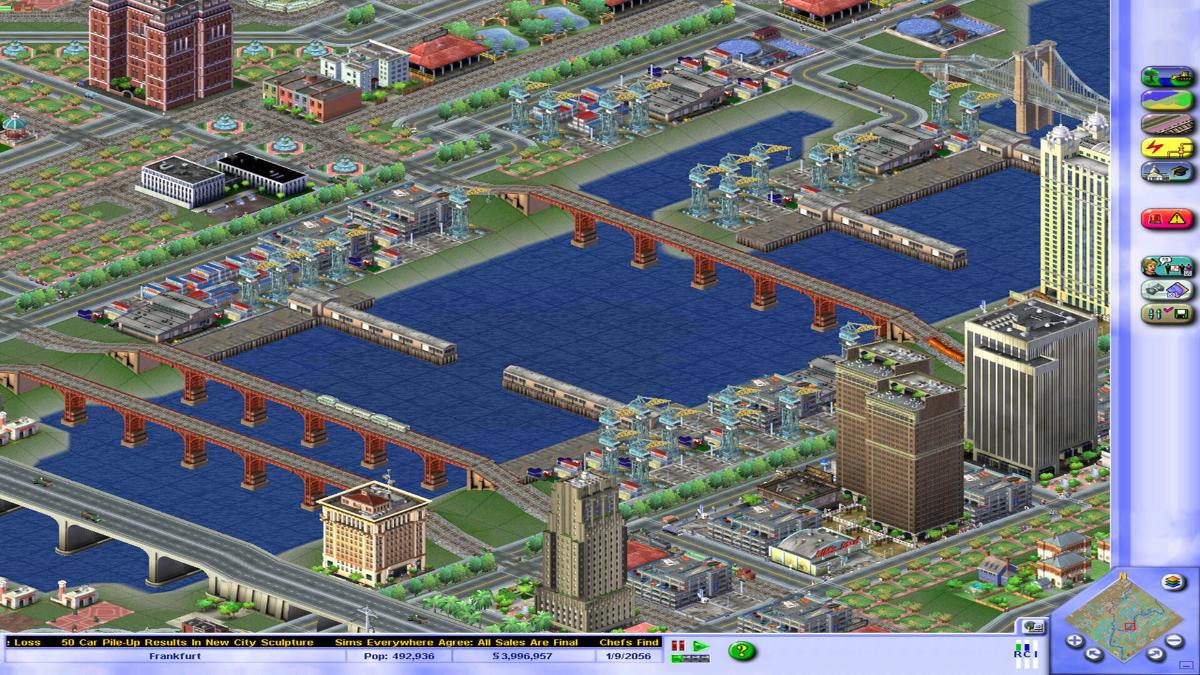
SimCity 3000 – Steam
Consistency Across Menus, Systems, and Platforms
Consistency helps players build trust and confidence in a game’s systems. When UI elements behave predictably, players learn mechanics faster and feel more in control.
Consistency should apply to:
- Menu layouts and navigation patterns
- Icon styles and button behaviour
- Interaction logic across different game modes
- Platform-specific adaptations for PC, console, and mobile
Studios providing game UI/UX design services often help reduce production time and enable high-quality results based on many years of working with other companies, particularly because they understand how to design systems that remain coherent as a game scales or moves between platforms.
Player-Centred UX Design
Game UX design focuses on how players experience the game moment to moment. This goes far beyond menus and HUDs, encompassing learning, progression, feedback, and emotional response.
Strong player-centred UX includes:
- Intuitive onboarding and tutorials that respect player intelligence
- Gradual introduction of mechanics rather than information overload
- Clear feedback for actions, errors, and success
- Logical navigation that minimises friction
Understanding UX design in video games means recognising that every interaction, no matter how small, contributes to the player’s perception of quality and polish.
Immersion Through Thematic Integration
A well-designed game interface should support immersion rather than disrupt it. Visual style, animation, sound, and layout should align with the game’s genre and narrative tone.
Examples include:
- Minimalist HUDs for atmospheric or narrative-driven games
- Stylised interfaces that reflect fantasy, sci-fi, or historical themes
- Diegetic UI elements embedded within the game world
However, immersion should never come at the cost of usability. The best designs balance aesthetic identity with functional clarity, ensuring players always understand what the interface is communicating.

RimWorld – Steam
Accessibility as a Core Design Feature
Accessibility is no longer a niche consideration. It is a defining feature of high-quality game UX design and increasingly expected by players.
Common accessibility features include:
- Adjustable text size and UI scaling
- Colour-blind friendly modes and contrast settings
- Fully remappable controls
- Subtitles and visual audio cues
- Difficulty and assistance options
Accessible design benefits all players, not just those with specific needs, by making interfaces clearer and more flexible.
Feedback, Responsiveness, and Player Confidence
Games rely on constant feedback loops. Players need immediate confirmation that their actions have been recognised.
Effective feedback may include:
- Visual responses such as animations, flashes, or UI changes
- Audio cues for success, failure, or danger
- Haptic feedback on supported devices
Clear feedback builds confidence, reinforces learning, and prevents frustration, especially in fast-paced or competitive games.
Scalability for Live and Evolving Games
Many modern games are designed as long-term platforms rather than one-off releases. UI/UX systems must be flexible enough to support updates, new content, and evolving mechanics.
Scalable UI/UX design considers:
- Modular interface components
- Space for future features without redesigning the entire UI
- Clear categorisation of information as systems expand
This forward-thinking approach reduces technical debt and ensures a consistent experience over time.
Conclusion
Game UI/UX design is a critical discipline that shapes how players interact with, understand, and enjoy a game. From clarity and consistency to immersion, accessibility, and scalability, strong UI/UX design underpins every successful player experience.
Games that invest in thoughtful UI/UX design not only feel more polished but also respect the player’s time, attention, and ability. As player expectations continue to rise, well-executed game UI/UX design will remain one of the strongest indicators of quality in modern game development.