


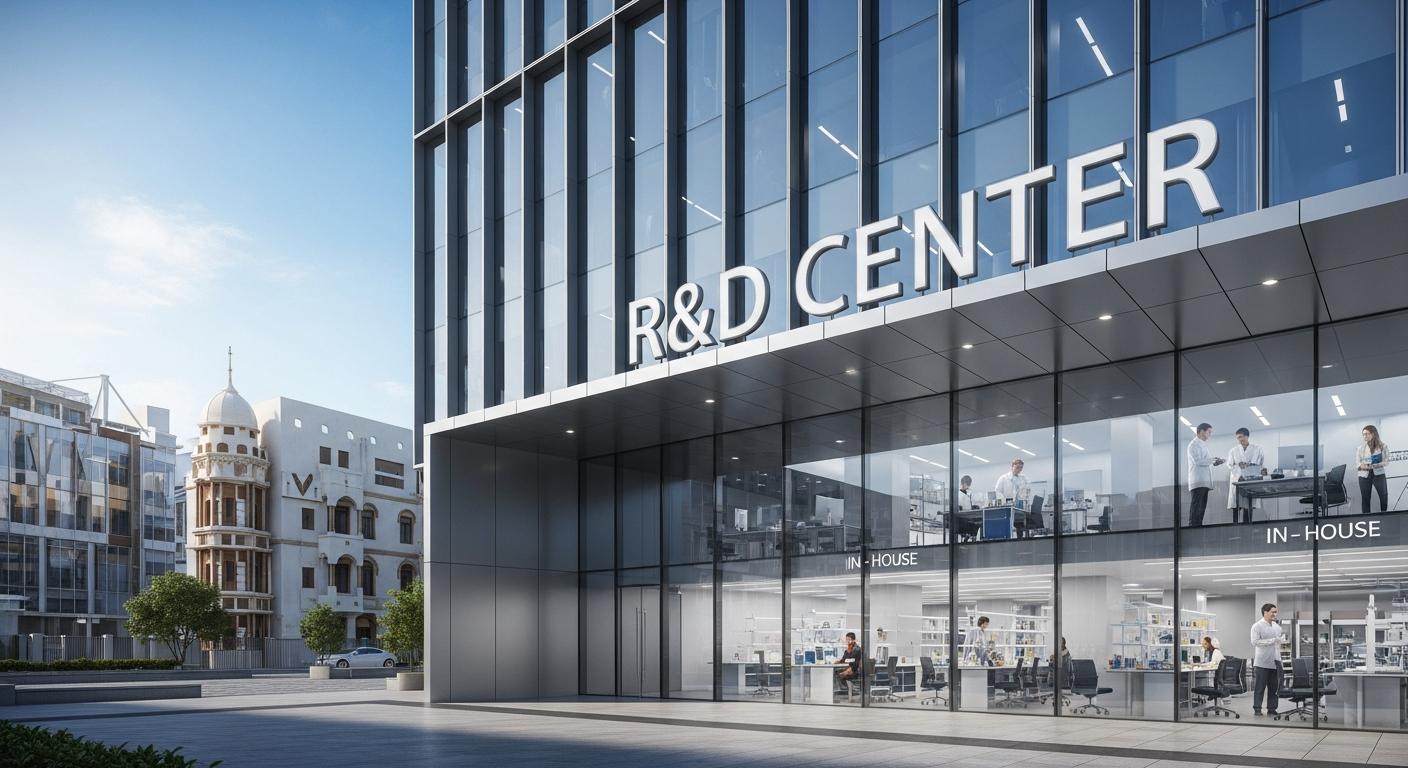

Building products in 2026 is a race against both competition and time. AI-native features, ever-shorter release cycles, and demanding investors have pushed many tech companies to look beyond their local talent pool. If you are a founder, CTO, or corporate innovator, you have probably flirted with outsourcing or working with freelancers. Yet you also know that core knowledge can leak and cultural gaps can slow you down. That’s why more teams are taking a bolder path: opening their own offshore R&D center and keeping everything “in-house,” just not “in-country.”
The idea sounds glamorous, but it is also intimidating. Where do you plant the flag? How do you recruit and protect IP? What does it cost in 2026? This article walks you through the decisions that matter, sprinkled with lessons from founders who did it recently.
Table of Contents
Why 2026 Is the Right Moment
The market conditions are oddly perfect. On one side, Western markets are cooling, forcing executives to stretch every dollar. On the other hand, top engineers in talent hubs like Poland, Vietnam, and Colombia are eager for roles that promise long-term product ownership rather than agency gigs. Cloud-based tooling has matured so much that location is now more a compliance question than a technology hurdle. And with hybrid work now mainstream, your onshore staff is already used to Slack hand-offs across time zones.
Regulatory clarity helps, too. Both the EU’s AI Act and the U.S. CHIPS and Science Act clarified how cross-border data and IP must be handled. Knowing the rules makes it easier to convince board members that offshore in house R&D centers will not become a legal landmine.
Finally, inflation in traditional hotspots (like the Bay Area or London) makes the cost arbitrage hard to ignore. Senior backend engineers in major U.S. tech hubs such as San Francisco often command substantially higher total compensation than their counterparts in Central and Eastern Europe. For example, senior software engineers in San Francisco have a median total pay of around $277K per year, according to Glassdoor salary data, while senior engineers in Kraków tend to have significantly lower total compensation (often in the lower $100K range or less on local packages). This cost differential means that staffing a 40-person engineering squad in Poland can be materially less expensive than in the U.S., potentially freeing up budget for additional product investment.
Strategic Foundations: From Idea to Playbook
Before you compare office rents, outline a clear playbook. Offshore in house R&D centers only succeed when they start with a single, sharp mission. Will the new team own an existing module? Will it explore greenfield concepts? Decide early. Ambiguity kills momentum faster than mis-hires.
Second, secure explicit executive sponsorship. Offshore in-house R&D centers fail when they become side projects. Budgets must be approved by your COO and CFO, but equally crucially, your product leaders must treat the new site as a top priority. Promote at least one trusted architect or engineering manager to become the initial on-site champion. This person carries company culture across borders and keeps early hires motivated while the headcount is still small.
Third, pick a funding horizon. Treat the launch like a Series A inside the company: a three-year runway, milestones, and a clear ROI metric, usually reduced time-to-market or expanded feature throughput. In line with that, lock a seed team size (often 10-12 engineers plus one HR partner) and a growth curve (e.g., double in year two, reach 50 by year three).
Finally, design communication rituals before you hire anyone. Daily stand-ups spanning oceans can be punishing. Many teams now favor a written stand-up model: each squad posts a short Loom or Notion update before the U.S. morning, and comments flow asynchronously. Decide on these rituals early; changing them later is cultural surgery.
Location and Talent: Picking the Best Spot, Not the Cheapest
Every Google search will spit out “Top 10 countries for software outsourcing.” Ignore rankings and zoom into the variables that matter for your stack, compliance needs, and culture.
Talent Depth
Look at university output and seniority mix, not just raw headcount. If you build low-level networking software, you need engineers comfortable with C++ and Rust, which might be plentiful in Romania but rarer in Argentina. For AI pipelines in Python, Vietnam, and Egypt have exploded with Kaggle finalists and open-source contributors. Stack Overflow’s developer surveys list Poland as one of the countries with a notable share of respondents among European developer communities.
Time-Zone Overlap
A two-hour overlap is workable; four is ideal. Bogotá lines up neatly with New York mornings and afternoon stand-ups in San Francisco. Bangalore still works for Europe but can strain West Coast syncs unless you adopt a near-fully asynchronous rhythm from day one.
Cost, but in Totality
Salary is only half the bill. Budget for local HR, employer taxes, and retention perks. In Lisbon, employer social contributions can hit 26%. In Mexico City, private healthcare packages are almost expected by senior developers. Also, budget travel: flying your Californian PMs to Kyiv four times a year could erase part of the wage arbitrage.
Geopolitical Stability and IP Laws
War risk turned theoretical checklists into board-level priorities in 2022. Governments in Poland, Portugal, and Chile now actively advertise NATO membership or trade-agreement stability as selling points. Meanwhile, India amended its Copyright Act in late 2025 to align with the U.S. DMCA, making cross-border IP assignment easier. Keep legal counsel close and procure local opinions early.
Legal and IP Safeguards: Boring but Crucial
A single leak dispute can offset years of savings, so treat legal frameworks as product requirements, not afterthoughts. Here’s what works.
Start with an “IP box” entity structure. Most firms create a fully owned local subsidiary; all employees sign inventions-assignment agreements with that entity, which in turn assigns IP to the parent. This mirrors onshore practice and keeps auditors happy.
Next, replicate your code-access guardrails. All production repositories should enforce SSO, 2FA, and logging. If you deal with health data, ensure the offshore cloud region complies with GDPR or HIPAA mirrors. For EU customers, your Data Processing Agreement must list the offshore entity as a sub-processor – an easy clause to forget.
Draft local employment contracts you actually understand. Western founders often copy-paste templates, only to learn that Colombian law implies a 30-day severance minimum for probationary layoffs. Work with a bilingual firm to integrate non-compete and confidentiality clauses that respect local labor codes. It is cheaper than litigation.
Setting Up the First Ten: Recruitment, Culture, and Tooling
 When you setup offshore R&D center operations, resist the urge to hire too fast. Your first ten hires define the next hundred.
Start with a senior engineering lead who has scaled teams before. Pay a 10-15% premium if needed. They will steer interviews, handle bureaucratic chores, and preach company values. Pair them with a local recruiter; do not rely on agencies alone. That recruiter becomes the founder-style “people partner” who knows the talent scene and warns about salary inflation before it hits.
Interview for ownership mentality. Ask prospects to walk through a feature they maintained for at least two years. You want builders, not project hoppers. Promise genuine product impact, not just task execution. In 2025, LinkedIn data showed that retention at offshore in house R&D centers correlated strongly with code ownership metrics. Make that part of your pitch.
Tooling matters too. Mirror your onshore CI/CD pipeline exactly. Engineers switching GitLab runners when they cross oceans lose confidence. Invest early in site-to-site VPNs, shared dashboards, and unified observability. The extra $2k per month is trivial compared with searching logs by email thread.
Scaling to Fifty and Beyond: Governance Without Bureaucracy
Growth from a 12-person beachhead to a 50-engineer powerhouse is where many initiatives wobble. The challenges shift from “Will people join?” to “Will they stay aligned?” Here are field notes.
Give the site a real P&L goal. Maybe it owns the mobile app revenue line or the new ML-as-a-Service experiment. Profit accountability crushes the “outsourcing” stigma and motivates leadership roles locally.
Stay on-site quarterly. Hybrid is fine, but physical time still trumps Zoom for cultural bonding. Rotate founders or VPs every three months. Block two days for roadmap discussions and one day for casual dinners. Travel bills sting, but churn hurts more.
Embed product managers early. Many companies wait until engineering headcount hits 40 before adding local PMs, leaving engineers stuck in a ticket factory mindset. Hire at least one product owner by the 25-engineer mark so strategy conversations happen in the same hallway, not six time zones away.
Finally, keep bureaucracy sane. A lightweight design-review doc, a shared decision log in Confluence, and a monthly architecture roundtable are often enough. Over-processing can scare away the entrepreneurial spirit you came looking for.
Measuring ROI and Long-Term Health
Cost savings are obvious, but the board will soon ask tougher questions. Prepare these metrics from day one.
- Feature lead time. Track how fast a Jira ticket moves from “In design” to “In production” in the offshore site compared with headquarters.
- Defect rate per 1,000 lines of code. Quality tells you whether the knowledge transfer is sticking.
- Retention beyond 24 months. Industry average in mature hubs is 73% (Stack Overflow, 2025). Beat it, and you know your culture works.
- Patent filings or published research. If innovation is a goal, count it. Many offshore in-house R&D centers in Taiwan and Israel now file more patents per engineer than their U.S. parents.
Report these numbers quarterly, not annually, so issues show early.
Common Pitfalls and How to Dodge Them
You can read success stories all day, but learning from failure stings less than living it.
Scope Creep is the Silent Siller
Avoid throwing random maintenance tasks at the new team “because they have bandwidth.” Protect their charter unless the strategy truly changes.
Cultural Islands Emerge if Language Barriers Persist
Offer free English lessons or local language crash courses to both sides. Dual effort signals respect.
Underestimating Middle Management
When you setup offshore R&D center logistics, you need engineering managers by the time your team crosses 15. Otherwise, the original site lead becomes a bottleneck, decisions slow, and morale tanks.
Ignoring Local Holidays
Productivity drops when headquarters forget that engineers in Kraków disappear during All Saints’ Day or Songkran in Bangkok. Build these calendars into sprint planning.
The Budget Reality Check
A realistic 2026 budget for a 40-engineer operation in Warsaw looks like this:
- Salaries and bonuses: $3.4M-$3.9M
- Benefits and taxes: $1.1M
- Office lease and utilities (hybrid model, 50 desks): $180k
- Travel and events: $120k
- Professional services (legal, accounting): $80k
- Miscellaneous (training, swag, community sponsorship): $60k
Total: roughly $5.4M annually, or about $150k per engineer fully loaded. By comparison, a senior engineer in New York typically costs $280k-$330k fully loaded, depending on equity, benefits, and overhead – preserving a meaningful cost delta even after factoring in coordination and management costs. Companies should still plan an 8-10% buffer for currency fluctuations; the Polish zloty saw mid-single-digit volatility against the U.S. dollar during 2025.
Final Thoughts
Setting up an offshore R&D center is not a quick fix; it is a strategic move that reshapes your company’s DNA. Do it when you crave sustained innovation, not just cheaper code. Start with clear intent, pick a location that fits your stack and culture, invest early in leadership and communication, and measure relentlessly.
Follow those rules, and in three years you will look back at the decision the way early cloud adopters remember ditching their server racks: “Why on earth didn’t we do it sooner?”