Last Updates Published: April 13, 2026

Lino Printing Process: Step-by-Step Guide for Beginners

If you want to learn the lino printing process, this guide walks you through each stage in a clear, beginner-friendly order. From choosing materials and setting up your workspace to carving, inking, printing, and drying, you will see how each part of the process fits together.

Whether you are completely new to linocut or looking to improve your results, this page is designed to help you print with more confidence at home. It brings the key stages together in one place, with practical tips and links to more detailed guides where needed.

What Exactly is Lino Printing?

Lino printing, also known as linocut or linoleum block printing, is a relief printmaking technique. You carve a design into lino, roll ink onto the raised surface, and transfer the image onto paper or fabric using pressure. The parts you cut away do not print, while the uncut surface holds the ink and creates the final image.

A simple way to think of it is as a handmade stamp. Lino printing is popular with beginners because it is generally easier to carve than wood, while still allowing for bold shapes, fine detail, and repeatable prints. In this guide, we are focusing on the basic single-colour lino printing process, which is the best place to start when learning how to lino print.

You do not need a press to begin. A roller, some ink, a lino block, and a simple hand-printing tool such as a baren or wooden spoon are enough to get started. If you want a broader introduction to the medium, you can also read our guide on what lino printing is.

The Lino Printing Process: A Complete Overview

The lino printing process usually follows six main stages. Once you understand this order, the whole method becomes much easier to follow:

  1. Designing Your Lino Print: Planning and sketching your idea.
  2. Transferring Your Design: Moving the image onto the lino block.
  3. Carving the Lino: Cutting away the areas that will not print.
  4. Inking the Block: Rolling an even layer of ink onto the raised surface.
  5. Printing Your Linocut: Applying pressure to transfer the image onto paper.
  6. Clean Up and Drying: Finishing the process properly and allowing the print to dry.

If you are wondering how to do lino printing at home, these are the core stages you will follow each time. Below, we will break down each part of the lino printing process in more detail so you can build confidence and get better results with every print.


Monsters From The ID – Linocut on Zerkall Paper
What Tools Do I Need for Linocut?

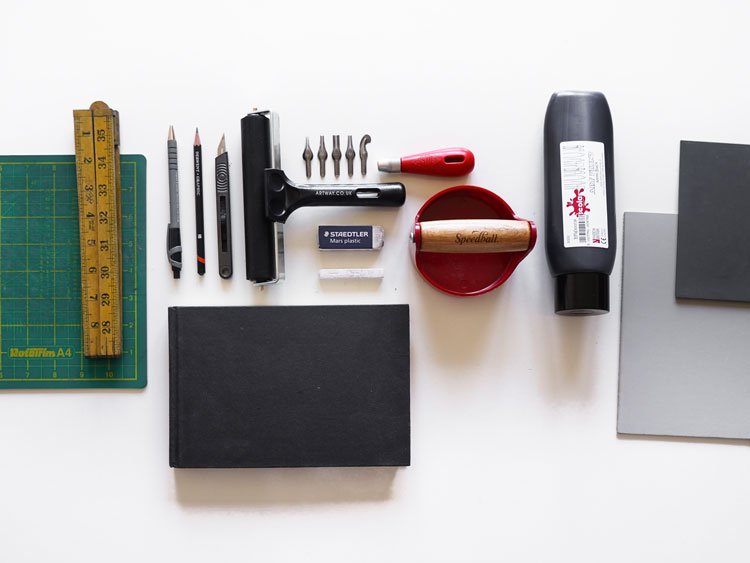
You do not need a huge amount of equipment to begin lino printing. A simple set of tools and materials is enough to start learning the process and producing good prints at home. If you want a deeper breakdown, see our guide to lino printing equipment explained.

Linoleum block
This is the surface you carve into. Softcut lino is often easier for beginners, while traditional grey lino is firmer and better for holding fine detail. Read more about the best lino for beginners here.

Lino cutting tools
These are used to carve your design. Different blades create different marks, with V-gouges useful for finer lines and U-gouges better for clearing larger areas. Read our guide on choosing the right lino cutting tools here.

Lino printing ink
Ink is rolled onto the raised surface of the block before printing. Water-soluble oil-based inks are a popular choice because they offer good working time and easier clean-up.

Paper
This is the surface that receives the print. Lightweight printmaking papers are often easier to print on by hand, though beginners can also start with simple cartridge paper.

Brayer or roller
A roller is used to apply an even layer of ink to the lino block. A good brayer helps you get a smoother, more consistent print.

Baren or wooden spoon
This is used to apply pressure to the back of the paper and transfer the image. If you are starting out, a wooden spoon can work perfectly well.

Inking plate
A flat, non-porous surface such as glass or perspex is useful for rolling out your ink evenly before applying it to the block.

Palette knife
This helps you lift, mix, and spread ink onto your inking surface.

Pencil and carbon paper
These are useful for planning and transferring your design onto the lino before carving.

The tools and materials needed for this guide

Most of the materials needed for lino printing are relatively affordable, especially when you are starting with a simple setup. If you want to build your kit more carefully, you can explore our lino printing equipment guide, browse our range of printmaking equipment, or look at our beginner-friendly lino printing kits, which include many of the essential tools and materials needed to get started.

How to Lino Print: The Process from Start to Finish

Let’s get printing! Follow these steps for a successful first print. For those who want to dive deeper, each step includes a link to a more detailed guide.

1. Gather Your Materials

Start by collecting all the necessary materials for lino printing. Having everything within reach makes the process much smoother. If you’re unsure what materials are essential, check out our complete material guide for lino printing.

Next, let’s prepare your workspace to ensure everything is set up correctly.

2. Prepare Your Workspace

With your materials ready, ensure your workspace is clean, well-lit, and protected with a covering.

  • Protect Your Surface: Lay down newspaper or a plastic sheet.
  • Good Lighting: A well-lit space is crucial for carving safely.
  • Safety First: Always carve away from your body and keep your fingers behind the cutting tool.

For more tips, refer to our guide on preparing your workspace or studio.

Once your workspace is ready, it’s time to focus on your design.

3. Design Your Linocut

Now that your workspace is prepared, begin sketching your design on paper.

  • Keep it Simple: For your first print, choose a simple design with bold shapes and lines.
  • Remember the Mirror Image: Your printed image will be a mirror image of your carved block.
  • Positive and Negative Space: Think about what you will carve away (negative space) and what you will leave (positive space).

If you need help, check out our guide to designing your lino print or our guide for lino print ideas for beginners.

After you have your design ready, it’s time to transfer it onto the linoleum block.

4. Transfer Your Design

With your design complete, the next step is transferring it onto your linoleum block. Place carbon paper on the lino, place your drawing on top, and trace over the lines with a pencil. For a detailed walkthrough, see our guide on transferring your design onto your block.

Once your design is on the block, let’s move on to carving.

5. Carve the Lino Block

Using your lino cutting tools, carefully carve out the negative space of your design.

  • Start with the Outlines: Use a V-shaped gouge for fine lines.
  • Clear Away Larger Areas: Use a U-shaped gouge for larger sections.
  • Take Your Time: Carving is a slow, meditative process. Don’t rush it!

Our how to carve your linoleum blocks guide offers more detailed techniques.

With the carving done, let’s get ready for inking.

6. Ink the Block

After carving, it’s time to apply ink.

  • Squeeze Out Ink: A pea-sized amount is a good start.
  • Roll Out the Ink: Use your brayer to roll the ink into a thin, even layer on your glass sheet. You’re looking for a velvety texture.
  • Ink the Block: Roll the inked brayer evenly across the raised surfaces of your block.

For more detailed techniques, read our guide on inking your block. If you’re interested in printing in multiple colours, explore our masking technique for multi-colour printing.

Once your block is inked, it’s time to print your design.

7. Print Your Design

This is the moment of truth!

  • Position Your Paper: Carefully place the paper onto your inked block.
  • Apply Pressure: Use a baren or the back of a spoon to apply firm, even pressure in circular motions across the entire back of the paper.
  • The Reveal: Gently peel the paper back from one corner to reveal your print!

For more details, check out our guide on printing your linocut.

Once your print is done, let’s move on to drying and cleaning up.

8. Dry and Clean Up

  • Drying: Place your print somewhere safe to dry. Depending on the ink and paper, this can take anywhere from a few hours to a few days.
  • Cleaning: Clean your tools and inking plate immediately with warm, soapy water (if you’re using water-soluble inks).

Follow our lino print cleaning guide to ensure everything is ready for future projects.

Troubleshooting Common Linoleum Printing Problems

  • Patchy or Faint Prints: You may not be using enough ink or applying enough pressure.
  • Blurry prints: The paper may have shifted, or the pressure may have been uneven.
  • Smudged Prints: You may be using too much ink, or the paper may have slipped during printing.
  • Ink in the Carved Areas: You are likely using too much ink. Roll out a thinner layer on your plate.

If your linoleum prints are coming out smudged, faint, or marked where they shouldn’t be, don’t worry! Head over to our short Lino Printing Troubleshooting Guide for easy fixes to the most common issues. With a few adjustments, you’ll be back to pulling crisp, beautiful prints in no time.

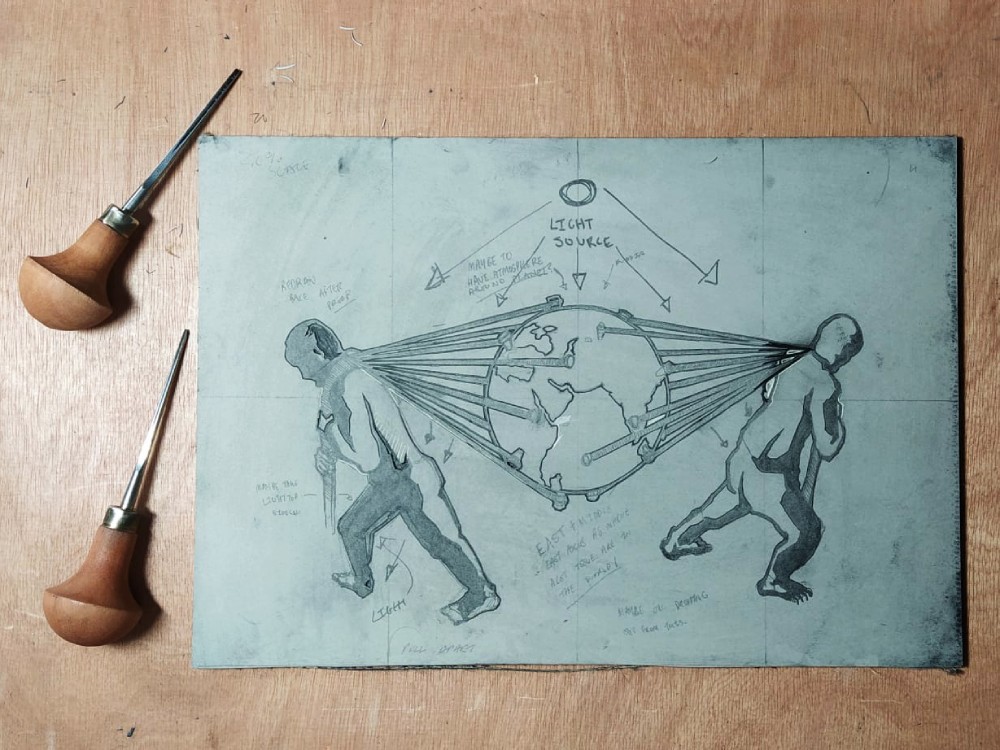
Designing and cutting linocut

Your Next Print Awaits: Final Thoughts and Next Steps

Congratulations on taking your first steps into lino printing. By following these basic techniques, you are already building the skills needed to create stronger, cleaner prints at home. As you continue, do not be afraid to experiment with different inks, papers, and more advanced methods as your confidence grows.

If you run into problems such as smudging, faint impressions, or uneven inking, take a look at our Lino Printing Troubleshooting Guide for simple fixes. Most importantly, enjoy the process and keep printing.

Luke Hickman

Author at Hickman Design

Luke Hickman is a printmaker and artist with over 15 years of experience, specialising in fine art printmaking methods such as lino printing, screen printing, and etching. He studied at Norwich University, graduating with a BA (Hons) Fine Art, and has worked in both the commercial printing and digital marketing industries for over 7 years. Luke’s work revolves around the idea of creating art that can illustrate a story, with topics covering war, politics, and history. His expertise in traditional printmaking techniques allows him to create unique, hand-crafted pieces that blend contemporary themes with time-honored processes. In addition to his artistic pursuits, Luke also writes about digital marketing and SEO at Bird Marketing, sharing his knowledge and experience to help businesses succeed online.

Read Full Bio