
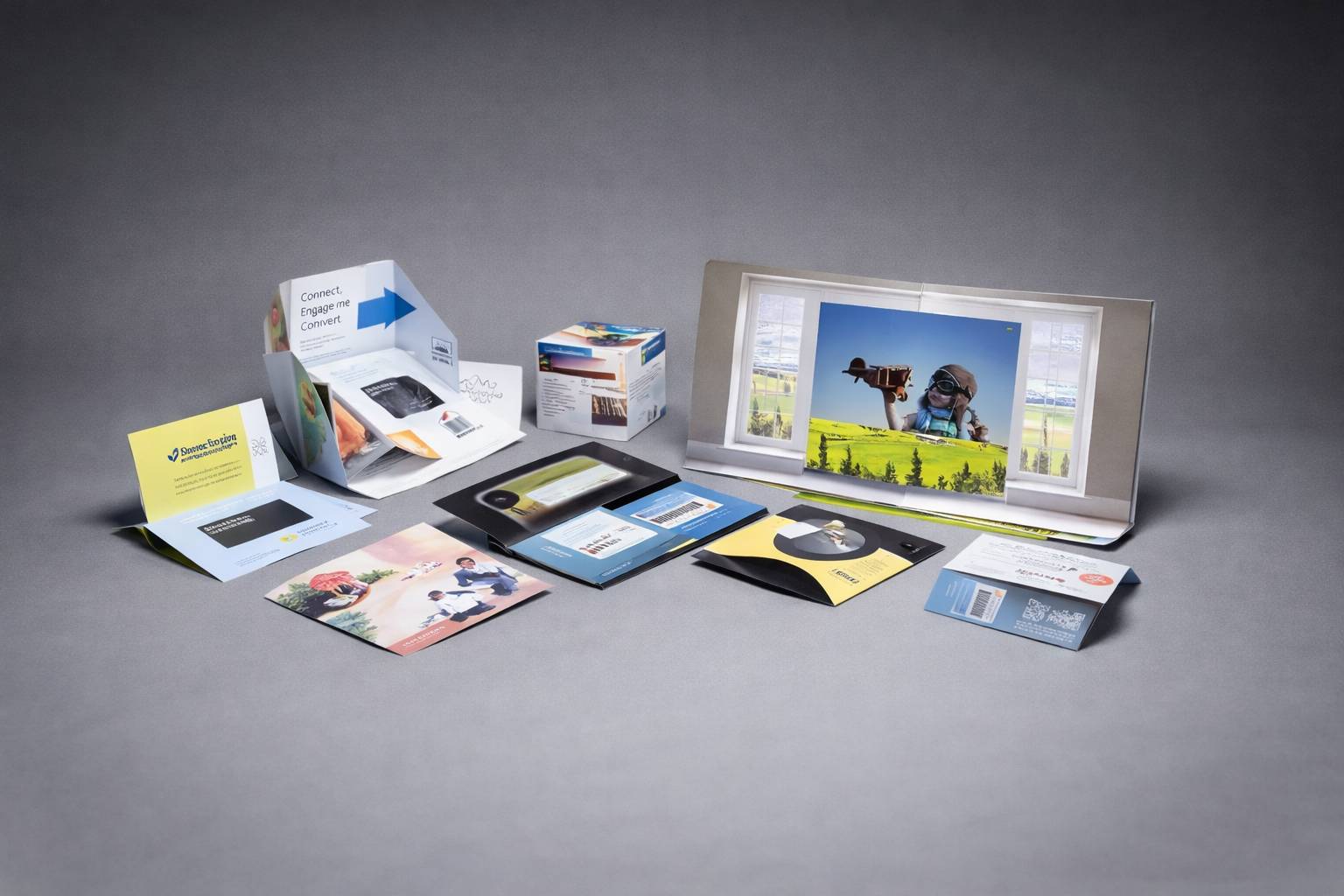

In crowded markets, attention is no longer won by volume alone. It is won by relevance, memorability, and the quality of the experience a brand creates. That shift helps explain why interactive marketing materials are moving from novelty to necessity. Physical formats that invite action, such as QR-enabled direct mail, NFC-triggered print, augmented packaging, and video mailers, give brands a way to bridge digital convenience with real-world presence.
For brands exploring high-impact formats, partnering with a specialist video brochure manufacturer is a practical way to turn passive content into a tactile brand interaction.
Table of Contents
Static Messaging Is Struggling in a Saturated Media Environment
Marketing teams operate in an environment defined by fragmentation. Audiences move constantly between inboxes, feeds, websites, marketplaces, and physical spaces. In that context, static messages often fail not because they are badly written or badly designed, but because they are too easy to ignore. Interactive materials change the exchange. They ask the recipient to scan, tap, open, watch, personalize, or respond, creating a more active form of attention than a fleeting impression.
That matters because attention is increasingly a performance metric in its own right. Marketreach, citing JICMAIL data, reports that the average direct mail item generates 108 seconds of attention across 28 days. That is materially different from many digital touchpoints, where exposure can last only seconds. The commercial implication is straightforward: when a format earns more sustained attention, it has a better chance of improving recall, consideration, and action.
Interactivity Makes Physical Media Work Harder
Physical marketing already benefits from presence. Interactivity adds function. A printed mailer with a QR code can move a prospect to a landing page in seconds. An NFC-enabled piece can unlock product demonstrations, booking pages, or payment options with a tap. As USPS Delivers explains, NFC-enabled direct mail can connect recipients directly to digital experiences such as quotes, forms, and social content. A video brochure can deliver motion, sound, and narrative without requiring the recipient to leave the physical experience behind. These formats do not replace digital channels; they improve how physical and digital channels work together.
This is one reason interactive materials are especially relevant for complex products, premium services, and considered purchases. In those categories, the challenge is rarely simple awareness. It is explanation, confidence, and differentiation. Interactive formats help by compressing the path between intrigue and understanding. Instead of asking audiences to remember a URL, search later, or revisit an email, the material itself becomes the bridge to richer information.
Trust Is Becoming a Competitive Advantage
Interactivity is not only about novelty. It also supports trust when executed well. Marketreach reports that 71% of consumers completely trust the mail they receive, while 81% say trust matters most when choosing a brand. In practice, that means physical media can provide a more credible environment for important messages than channels often associated with overload, impersonality, or fraud risk.
For brands, this creates a strategic opportunity. When high-value communication is delivered in an interactive physical format, the brand not only gains attention but also shapes the emotional context in which the message is received. A considered, well-produced piece signals investment, legitimacy, and intent. That can be especially useful in sectors where reassurance matters, such as finance, healthcare, education, property, luxury, and B2B services.
Video Has Become Too Important to Confine to Screens Alone
The case for interactive marketing becomes even stronger when viewed alongside the growth of video. Wyzowl’s 2026 data shows that 91% of businesses use video as a marketing tool, and 93% of video marketers consider it an important part of their strategy. HubSpot’s State of Marketing similarly identifies short-form video as one of the strongest ROI drivers for marketers.
The problem isn’t whether the video works. It’s that video usually competes in the most crowded environments possible. Interactive physical formats solve part of that problem by relocating video into a less congested, more intentional moment. A video message embedded in a brochure, presentation piece, or direct-mail format reaches the recipient with fewer competing tabs, ads, and notifications. For launches, sales enablement, executive outreach, recruitment, and account-based marketing, that difference can be commercially meaningful.
Measurability Has Improved Significantly
One historical objection to tactile marketing was the issue of attribution. That objection is weaker than it once was. USPS Delivers notes that QR codes, NFC, and personalized URLs can help marketers track scans, visits, behaviours, and downstream engagement. Interactive print is therefore not a retreat from data-led marketing; it is increasingly part of it.
This technical shift matters because modern marketing decisions are rarely based on channel preference alone. Teams need evidence. They need to know which audience responded, what content was consumed, and whether the interaction led to inquiries, meetings, or sales activity. Interactive materials now make that level of visibility far more achievable than traditional print alone. In other words, the format has evolved from display media into response media.
The Strongest Use Cases Are Practical, Not Theatrical
There’s a temptation to frame interactive marketing materials as high-concept creative executions suited only to large budgets. That’s too narrow. The most effective applications are often highly practical.
Product Education
Interactive formats are useful when the offer needs explanation. Demonstration videos, guided onboarding, or technical walkthroughs can quickly reduce friction.
Sales Outreach
For high-value prospecting, interactivity can help a message survive internal forwarding, desk time, and delayed review. Sustained attention is often more valuable here than broad reach.
Event Follow-Up and Account-Based Marketing
When a campaign is targeted at a defined list rather than a mass audience, relevance and memorability matter more than scale. Interactive physical materials support that model well because they combine message control with a more premium experience.
Brand Repositioning or Launches
When a company needs to signal a change, static communication may not be enough. Interactive materials can express innovation through the medium itself, not just through the copy.
Essential Does Not Mean Universal
Not every campaign needs interactivity. A routine offer, transactional notice, or low-stakes awareness push may perform adequately with simpler formats. The strategic question isn’t whether every brand should use interactive materials all the time. It’s whether the message, audience, and commercial stakes justify a richer experience.
That threshold is increasingly being met. Where brands need stronger recall, greater trust, better differentiation, or clearer integration across offline and digital touchpoints, interactive materials offer a practical solution. They’re becoming essential not because they’re fashionable, but because they solve several modern marketing problems at once: attention scarcity, digital fatigue, weak differentiation, and the demand for measurable engagement.
Conclusion
Interactive marketing materials are best understood as a response to how audiences now behave. People are overloaded with content, cautious with attention, and selective about what feels worth engaging with. Formats that combine physical presence with digital capabilities are well-positioned in that environment.
For brands that need to be remembered rather than merely seen, interactivity is no longer a fringe tactic. It’s becoming an increasingly reliable way to capture attention, earn trust, and move audiences from passive exposure to active response.