

Getting proper results with spray painting depends on matching your technique to each material. At Hickman Design we want you to get the best results across metal, wood, plastic and masonry, and the surface always dictates the approach.
Table of Contents
Why different materials need specific spray painting methods
Wood soaks up paint like a sponge because of its grain. Metal oxidises without primer. Plastic repels standard paint unless you use an adhesion promoter. The material changes how you prepare the surface, which primer goes down, and what finish coat sticks properly.
Spray application reduces paint usage by 20 to 30 percent compared with brush and roller methods when done correctly. Professional sprayers cover large or intricate surfaces three to four times faster than manual painting.
Choosing the right spray equipment for your project
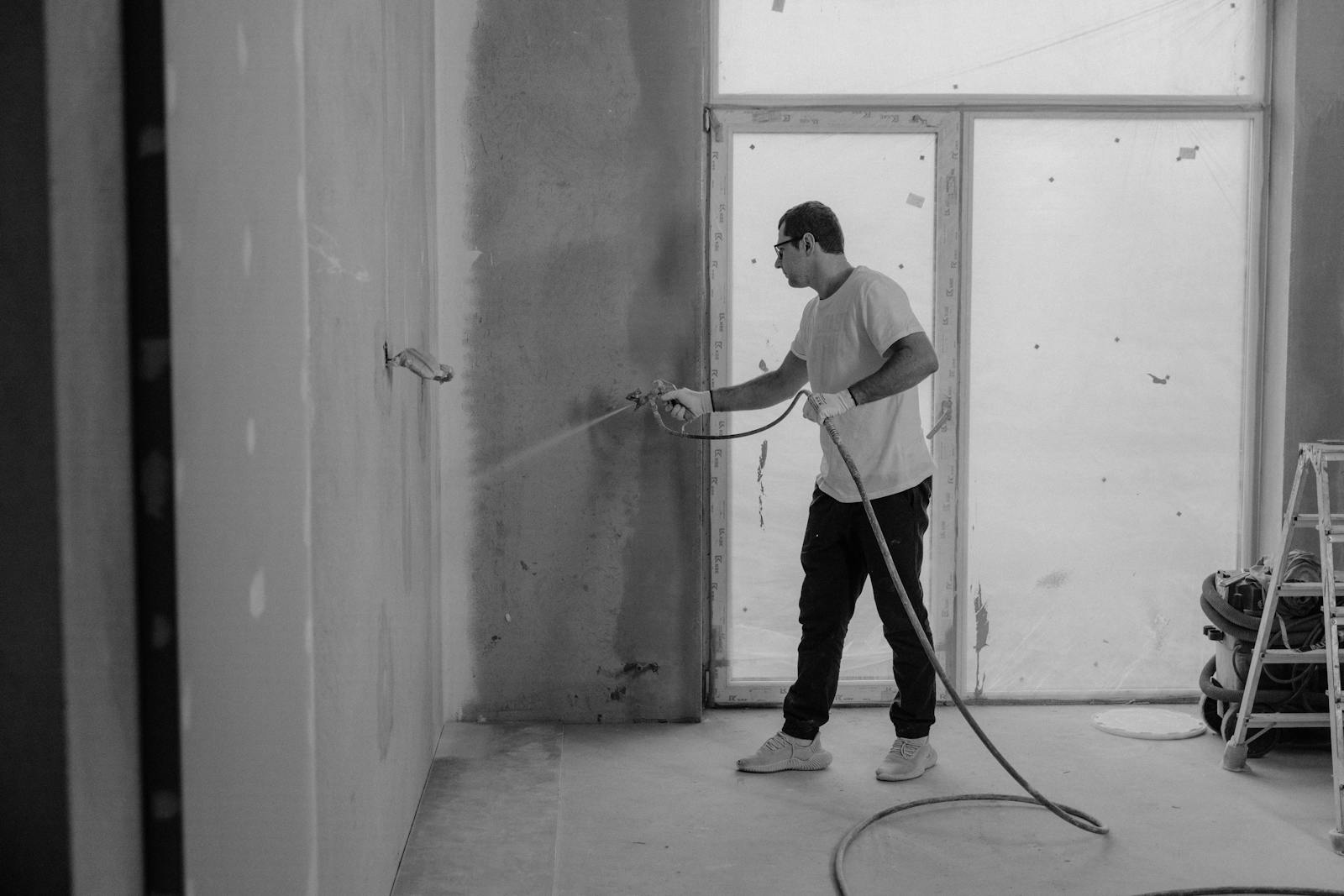
HVLP sprayers work best for detailed work and furniture because they create a fine mist with minimal overspray. Airless spray painting suits flat walls and ceilings, pushing thicker coatings through at high pressure. Conventional guns handle automotive and intricate parts well.
Aaron Campbell from Paint While U Wait uses specialized spray equipment for UPVC window spraying. His technique involves multiple light passes that prevent runs and achieve smooth finishes without brush strokes.
How to prepare and paint metal surfaces properly
Remove rust and loose paint with a wire brush before any spray work. Metal needs a rust-inhibitive primer to stop corrosion. Lightly sand after priming to give the topcoat something to grip.
Spray painting reaches tight corners on metalwork where brushes struggle. This prevents corrosion in railings, gates, and garage doors. Electrostatic spray techniques attract paint particles directly to metal, reducing overspray and improving coverage.
The prep work determines how long your finish lasts. Skip the primer and rust bleeds through within months, even with high quality spray paints.
Getting professional results on wood and furniture
Sand wood thoroughly before applying coatings. We finish with 220-grit for most furniture projects. Wood requires sealer to prevent the grain soaking up paint unevenly.
Spray finishing creates factory-style results on kitchen cabinets because the fine mist settles into grain patterns without heavy buildup. This preserves detailed joinery and decorative edges better than brush application.
Wipe everything with a tack cloth after sanding. Even small dust particles show up as bumps in your final coat. The edges need extra attention because exposed grain absorbs more coating.
Spraying plastic and UPVC without peeling
Plastic is smooth and non-porous, so standard paint just peels off. Lightly sand plastic with 220 to 320 grit paper to create texture for adhesion. Use specialised plastic primers or adhesion promoters to make coatings stick.
Temperature and humidity matter more on plastic because it expands and contracts. Work between 10°C and 32°C with humidity below 85% when possible. Spray painting avoids roller texture on window frames and maintains the original smooth surface.
Build up several thin coats instead of trying for full coverage in one pass. Each layer should look slightly translucent when wet. Wait the recommended time between coats.
Tackling masonry and exterior walls effectively
Airless systems push thick masonry coatings through quickly, covering rough textures on rendered walls. Sprayed coatings reach deep into surfaces and hairline cracks, improving weather resistance.
Clean masonry thoroughly with pressure washing first. Let it dry completely, which takes several days after rain. Fill cracks with masonry filler before priming.
The nozzle size affects coverage speed and control. We use larger spray patterns for main walls and switch to smaller tips around windows. Large-scale projects use extension lances to coat high areas safely from ground level.
Essential preparation that you cannot skip
A well-prepared surface lets paint adhere properly for a smooth and durable finish. Before spraying, ensure surfaces are clean, dry, and free of dust, grease or rust.
Use painter’s tape and masking paper to protect areas you do not want painted. Spray paint spreads beyond your target area, creating overspray on adjacent surfaces. Cover floors and nearby furniture within several feet.
Never spray on a windy day. Even a light breeze carries paint mist metres away. Work in a well ventilated area to avoid inhaling fumes.
Proper technique prevents common spray painting mistakes
Keep the gun 6 to 8 inches from the panel and perpendicular to the work surface. Moving closer causes runs. Holding too far away creates rough texture as paint particles dry before landing.
Overlap each pass by 50 percent. Move at steady speed without stopping on the object. Never start or stop spraying while aimed at your surface.
The previous stroke should guide your next pass to maintain even coverage. Spray from multiple angles on complex shapes to reach all surfaces without overloading one area.
Building up coats for flawless finishes
Apply multiple light coats rather than one heavy layer. Each coat should barely show when wet, building opacity gradually. This prevents drips and lets paint flow smooth.
Allow each coat to dry per manufacturer instructions before applying another. Rushing traps solvents underneath and prevents proper curing. Automotive work uses thin layers to create deep gloss without runs.
Too much paint at once leads to drips. If you see sagging, stop and let it dry. The paint flow from your gun needs adjusting to find the right balance between coverage and control.
Understanding spray paint types and when to use them
High quality spray paints provide better adhesion and durability. Rust Oleum products appear frequently in professional work because they perform reliably across applications.
Apply a clear coat for UV protection on outdoor projects. This preserves colour longer in sunlight. Work in controlled conditions when finish quality matters most.
Safety precautions for spray painting projects
Wear protective gear including respirator masks designed for paint fumes, safety goggles, and gloves. The propellants are extremely flammable, so keep your area away from open flames and sparks.
Store aerosol cans upright in cool, dry places. Dispose of cans per local regulations. Never puncture or burn them.
Fixing problems with pressure and paint application
Too much pressure causes overspray. Too little pressure creates orange peel texture and sags. Adjust air pressure to find the sweet spot for your gun and paint.
Poor spray patterns mean dried paint around the nozzle or low pressure. Test on scrap material before starting. Uneven finish comes from inconsistent technique or inadequate prep work.
Maintaining your spray equipment for optimal performance
Clean the spray gun thoroughly after each use with appropriate solvent. Use a paint filter on the pickup tube to prevent clogs. Clear aerosol nozzles by spraying upside down until only gas comes out.
Shake cans for two minutes before use to mix pigments properly. Inadequate mixing causes colour variation and weak coverage.
Achieving results that last
Quality spray painting comes from preparation, proper technique, and patience. Start spraying only after completing all prep work. The right paint for your surface makes a massive difference.
Training and technique play huge roles in achieving higher coverage with less waste. Spray painting techniques for different surfaces share common fundamentals. Clean properly, pick appropriate primers, apply thin coats, and let each layer cure. Master these basics and you can tackle any spray painting projects successfully.