


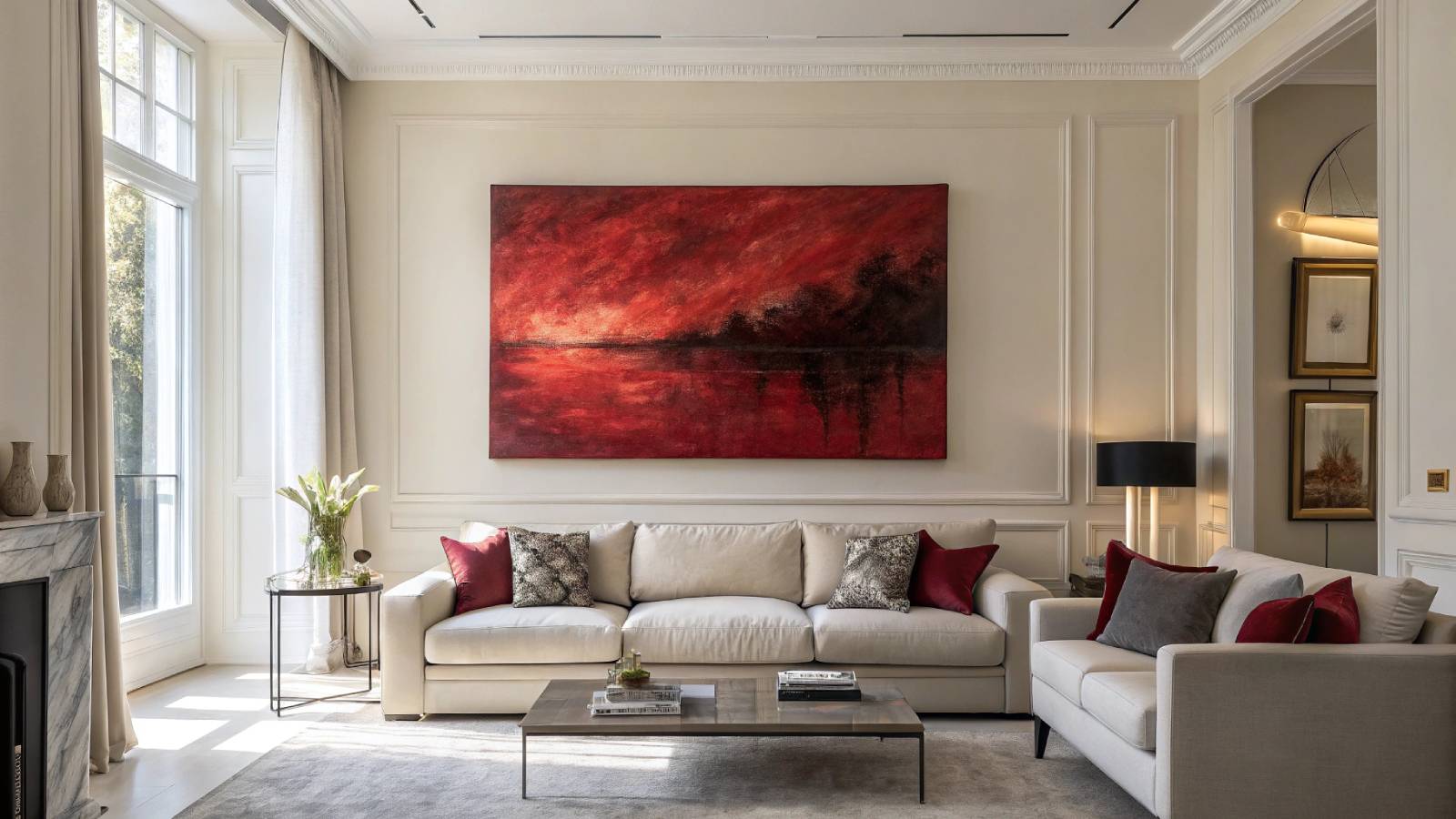

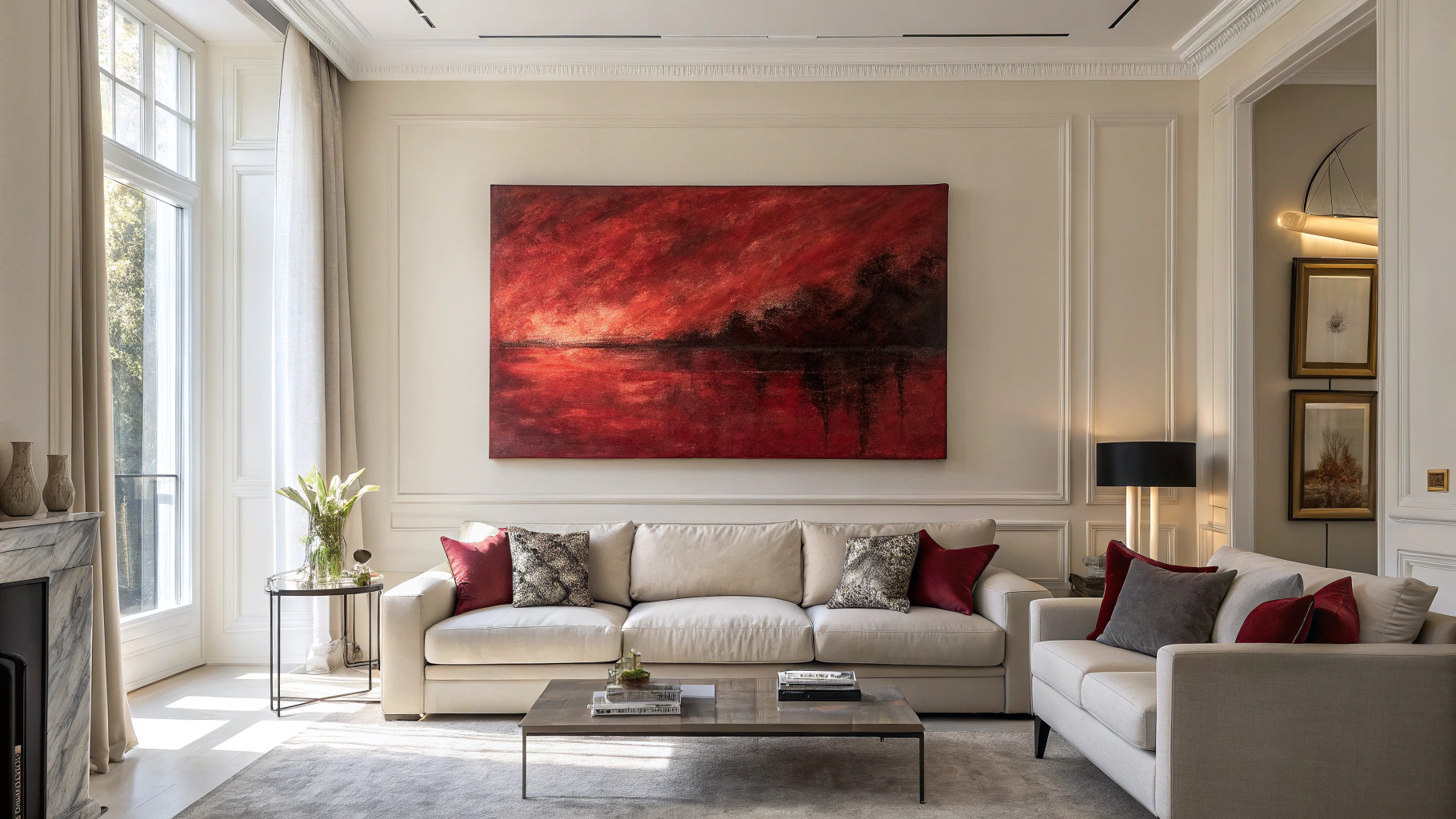
The living room is exactly what its name suggests. It is the space where daily life unfolds, where guests are welcomed, and where the home’s personality is most clearly on display. Because of this, the rules for hanging and arranging art here are more flexible than in quieter or more functional rooms. The goal is not rigid symmetry, but visual comfort and emotional impact.
Together with the entryway, which often visually connects to the living room, this area acts as the home’s calling card. It forms the first impression and sets the tone for everything that follows. Artwork in this space does more than decorate walls. It communicates taste, reinforces architectural lines, and brings warmth and identity into the room.
When placed thoughtfully, art does not compete with furniture. It completes it. A painting above a sofa can visually anchor the seating area. A bold composition near a cabinet can turn that piece into a focal point. The room becomes more inviting not only because of what is depicted, but because of how each artwork interacts with the shapes, colors, and textures around it.
Table of Contents
Choosing the Right Height in a Living Room
Unlike hallways or formal rooms, living rooms allow more flexibility in hanging height. While eye-level placement works in most cases, there are moments when lowering the artwork slightly can strengthen the visual flow of the space. For example, when hanging a piece above a sofa, lowering the center of the painting to align more closely with the backrest can create a stronger connection between the furniture and the wall.
This approach reinforces the horizontal lines of the room and makes the composition feel grounded. That said, not everything must align perfectly to be effective. Subtle offsets and asymmetry can add energy and visual interest, especially in contemporary interiors where movement and contrast are part of the design language.
The key is balance. Art should feel connected to the room, not floating above it or pressing down on the space.
Using Framing and Shape to Control Perception
Large framed works in a living room have the power to influence how the space is perceived. A strong rectangular composition can visually stretch a wall or make a seating area feel more defined. When multiple pieces are arranged within a larger frame-like structure, they can create the illusion of a single architectural element rather than separate artworks.
This technique works especially well when the artwork echoes the geometry of the room. Straight lines in frames reinforce linear furniture and shelving, while softer or curved compositions can soften a space filled with sharp edges.
The frame becomes more than a border. It becomes part of the design language of the room.
The Role of Color and Material Contrast
In a well-designed living room, contrast creates depth. Artwork can introduce this contrast through both color and texture. Smooth, glossy surfaces placed near soft fabrics and natural materials create a dynamic interplay that makes the room feel layered and rich.
This is particularly powerful when bold colors are involved. Deep reds, warm rust tones, and expressive crimson shades can energize a neutral living room without overwhelming it. Used in the right place, they draw the eye and establish a visual anchor that gives the space character. If you want to explore how red artwork can be used as a powerful focal element in modern interiors, a curated selection can be found at https://tryartwork.com/red-paintings, where strong color is balanced with thoughtful composition.
By introducing controlled contrast, art brings movement and life into the room, preventing it from feeling flat or overly restrained.
How Art Shapes the Architectural Conversation
Good interior design is a dialogue between forms. In a living room, this conversation happens between walls, furniture, lighting, and artwork. A carefully placed painting can echo the lines of a shelf, respond to the angles of a table, or highlight the rhythm created by windows and seating.
Small decorative accents in the room often reinforce this dialogue. Objects placed on shelves, tables, or sideboards can visually link to the artwork above them, creating a sense of continuity. When these elements speak the same visual language, the entire room feels intentional rather than assembled.
Art becomes the connector between architecture and decor, tying everything into a coherent story.
Making the Main Piece the Visual Anchor
Every successful living room has a focal point. Often, this is the main artwork. A strong, well-positioned piece draws attention and gives the eye a place to rest. When surrounded by simpler elements, it becomes the visual heart of the room.
This does not require excess. A single statement piece, when framed by a calm, minimalist environment, can be more powerful than a crowded wall. Clean lines, controlled color, and thoughtful spacing allow the artwork to speak clearly and confidently.
The surrounding furniture and decor should support this focal point, not compete with it. When the balance is right, the room feels structured, elegant, and visually complete.
Final Thoughts
Art in the living room is not just decoration. It is a defining element that shapes how the space feels and how it is experienced. Through thoughtful placement, careful attention to scale, and an understanding of how art interacts with furniture and architecture, a living room can become both expressive and harmonious.
When art is integrated with intention, it does more than fill empty walls. It gives the room its voice.