

Why watercolor sketching is becoming essential for modern artists working in relief, screen, and intaglio printing
As printmakers, we’re often drawn to the tactile, methodical nature of our craft – the careful planning, the precise cutting, the satisfying press of ink onto paper. But what happens when inspiration strikes between print sessions? When you’re travelling, commuting, or simply away from your studio?
This is where portable watercolor painting has become unexpectedly valuable for contemporary printmakers. Over the past year, watercolor kits have surged in popularity within the UK art community, offering artists a complementary medium that’s both accessible and surprisingly sophisticated.
Table of Contents
Why Printmakers Are Embracing Watercolor
The relationship between printmaking and watercolor might not seem obvious at first glance, but the connection runs deeper than you’d expect.
Colour Planning and Testing
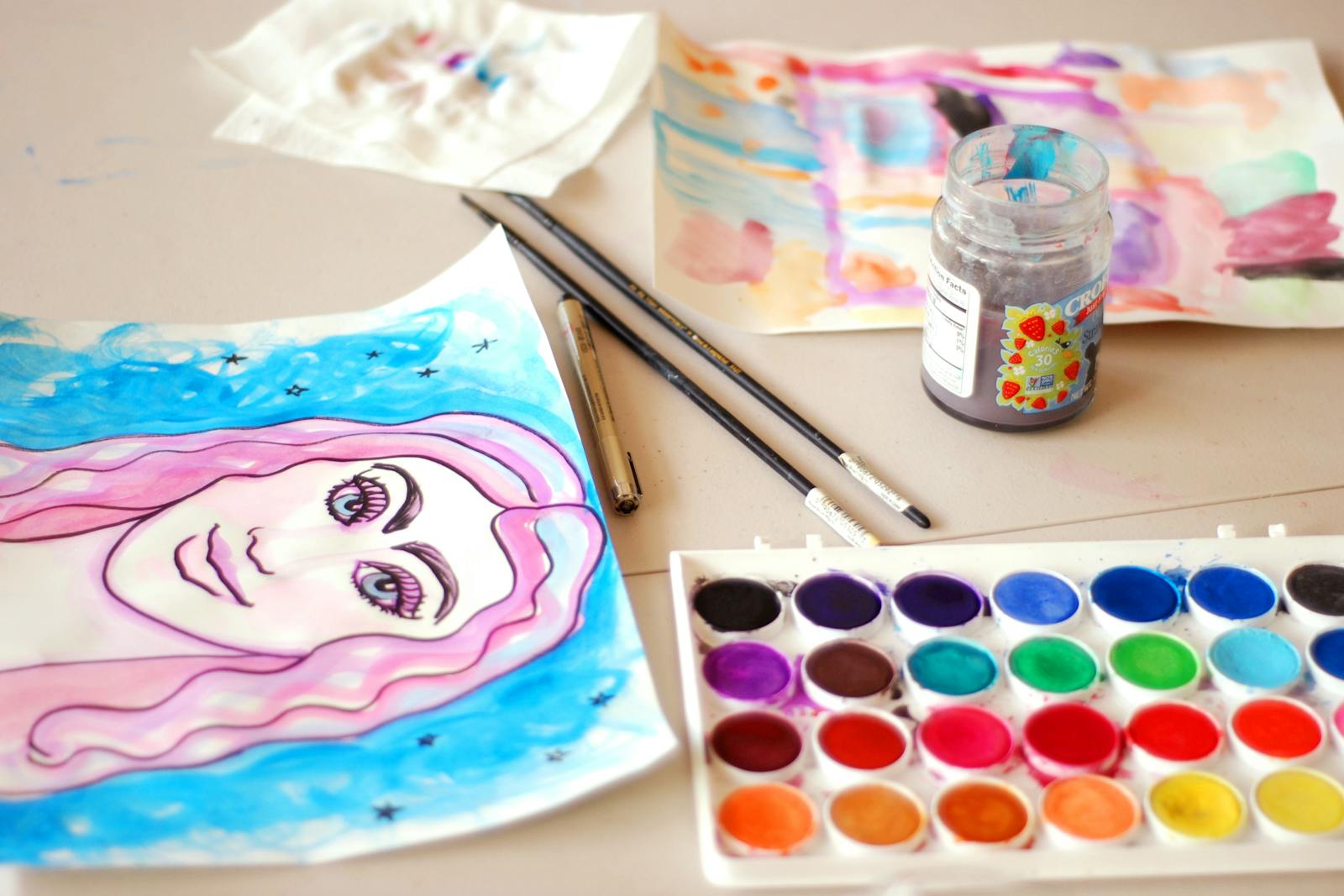
One of the most practical applications is using watercolor to plan multi-colour prints. Before committing to cutting multiple blocks or screens, watercolor allows you to test colour combinations quickly. The translucent nature of watercolor mirrors how relief printing inks layer and interact, making it an ideal planning tool for reduction linocuts or multi-layer screen prints.
Sarah Mitchell, a linocut artist from Essex, explains: “I started carrying a portable watercolor kit to sketch during my train commute. What began as a way to pass time became essential to my printmaking practice. I now plan all my colour separations in watercolor first – it saves me from costly mistakes.”
Complementary Skills
The skills transfer between media is significant. Printmakers already understand:
- Limited colour palettes
- Planning and layering
- Negative and positive space
- Working with translucent media
- The importance of good paper
These principles apply directly to watercolor painting, making the learning curve surprisingly gentle.
Portable Studio Freedom
Perhaps most importantly, watercolor offers something printmaking typically doesn’t: complete portability. You can paint anywhere – cafés, parks, museums, even at the beach – without needing a press, ventilation, or dedicated workspace.
The Modern Portable Watercolor Kit
Today’s portable watercolor kits bear little resemblance to the school-grade sets many of us remember. Modern offerings are specifically designed for serious artists who need professional quality in a compact format.
What to Look For
A quality portable watercolor kit should include:
Professional-Grade Paints: Look for artist-quality watercolours with high pigment concentration. Twelve colours provide adequate range for most work while remaining portable.
Integrated Brush with Reservoir: These ingenious brushes have a built-in water reservoir, eliminating the need for carrying water containers. Simply fill the barrel, and you have hours of painting time.
Quality Paper: The paper can make or break watercolor work. Look for kits that include 300gsm cold-pressed paper designed specifically for watercolor. The weight and texture prevent buckling and allow proper pigment absorption.
Compact Form Factor: The entire kit should fit comfortably in a standard bag. Wooden boxes around 15-20cm work well – large enough to be functional, small enough to carry everywhere.
Mixing Palette: Built-in palette areas for mixing colours are essential. Some clever designs incorporate the palette into the kit lid.
Practical Applications for Printmakers
1. Location Sketching for Print Ideas
Urban sketching has become increasingly popular among printmakers looking for fresh subject matter. Watercolor allows you to capture scenes quickly, including colour notes and atmospheric effects that photographs might miss.
James Parker, who specializes in architectural screen prints, uses watercolor for all his initial location work: “I spend Saturday mornings painting buildings around London. These become the foundation for my screen prints. The watercolor sketches capture the light and mood that inform my final colour choices.”
2. Plein Air Studies
Traditional printmaking requires advance planning – you can’t spontaneously work outdoors. Watercolor solves this limitation. Many printmakers now use outdoor watercolor sessions to study natural subjects, which later translate into linocuts or etchings.
The spontaneity watercolor offers provides balance to printmaking’s methodical nature. You can respond immediately to what you see, capturing fleeting light effects or quick gesture studies.
3. Testing Print Compositions
Before committing to carving a lino block or coating a screen, rough out your composition in watercolor. The quick-working nature of the medium allows multiple compositional attempts in the time it would take to transfer one design to lino.
This is particularly valuable for reduction linocuts, where you can’t go back once you’ve carved away material. Working through colour stages in watercolor first prevents costly mistakes.
4. Maintaining a Visual Diary
Many contemporary artists maintain visual diaries – ongoing records of observations, experiments, and ideas. A portable watercolor kit makes this practice practical. You can work during lunch breaks, on trains, or whenever you have twenty minutes free.
These diaries often become rich sources of inspiration for print projects, filled with colour studies, composition ideas, and reference material.
Technical Considerations
Paper Quality Matters
If you’re serious about watercolor, don’t underestimate paper quality. Just as printmakers need proper printmaking paper, watercolor requires paper that can handle moisture without falling apart.
Look for:
- Weight: Minimum 300gsm to prevent buckling
- Texture: Cold-pressed (NOT surface) offers good tooth for pigment
- Sizing: Proper internal and surface sizing prevents over-absorption
Many portable kits now include pad-style paper specifically designed for watercolor, bound at one edge for easy sketching.
Brush Technique Basics for Printmakers
If you’re new to watercolor, a few basic techniques will get you started:
Wet-on-Dry: Apply wet paint to dry paper for crisp edges and controlled marks. This technique feels familiar to printmakers used to deliberate mark-making.
Wet-on-Wet: Apply wet paint to pre-moistened paper for soft, flowing effects. Useful for atmospheric backgrounds and gradations.
Layering: Build up colour intensity through multiple transparent layers. This mirrors the layering process in multi-colour printmaking.
Lifting: While paint is still wet, lift out colour with a clean, damp brush or paper towel. This creates highlights and corrections.
Colour Mixing Principles
Printmakers already understand limited palettes through working with spot colours. Watercolor operates similarly – a small selection of carefully chosen colours can mix to create extensive ranges.
A basic palette might include:
- Warm and cool primaries: Yellow ochre and lemon yellow, ultramarine and cerulean blue, alizarin crimson and cadmium red
- Earth tones: Raw umber, burnt sienna
- Mixing grey: Payne’s grey or mixed from primaries
This principle-based approach to colour will feel immediately familiar to printmakers who routinely mix their own ink colours.
Integration into Your Printmaking Practice
Morning Warm-Up Sketches
Start studio sessions with fifteen minutes of watercolor sketching. This warms up your observational skills and creative thinking before moving to more labour-intensive printmaking work.
Planning Print Editions
Use watercolor to plan limited edition prints, particularly for reduction linocuts:
- Paint your intended final image in watercolor
- Photograph or scan it
- Work backward to determine which colours print in which order
- Plan your carving stages accordingly
This planning prevents the frustration of carving away sections you later realize you needed.
Exhibition Preparation
Some printmakers now exhibit watercolor studies alongside finished prints. This gives viewers insight into your creative process and adds variety to exhibitions. The more affordable price point of watercolor works also provides accessible entry points for new collectors.
Teaching and Demonstration
Watercolor’s portability makes it excellent for teaching situations. Demonstrate composition and colour theory concepts in watercolor before students commit to print blocks. The immediate feedback helps learning considerably.
The Community Aspect
The rise of portable watercolor has created an active community in the UK art scene. Urban sketching groups meet regularly in cities across the country, and many printmakers participate. This cross-pollination between media brings fresh perspectives.
Social media has amplified this community aspect. Instagram and TikTok feature substantial watercolor content, with hashtags like #UKUrbanSketchers and #WatercolorDaily showcasing thousands of artists. Engaging with this community provides inspiration, feedback, and connection.
Equipment Recommendations
While many brands produce portable watercolor kits, several stand out for quality and thoughtful design.
Entry-Level Options (£15-30)
Basic sets from established brands like Winsor & Newton or Daler-Rowney provide solid quality at accessible prices. These work well for testing whether watercolor suits your practice before investing heavily.
Mid-Range Quality (£30-60)
This range offers the best value for serious artists. Companies like Schmincke and Sennelier produce excellent portable sets with professional-grade pigments.
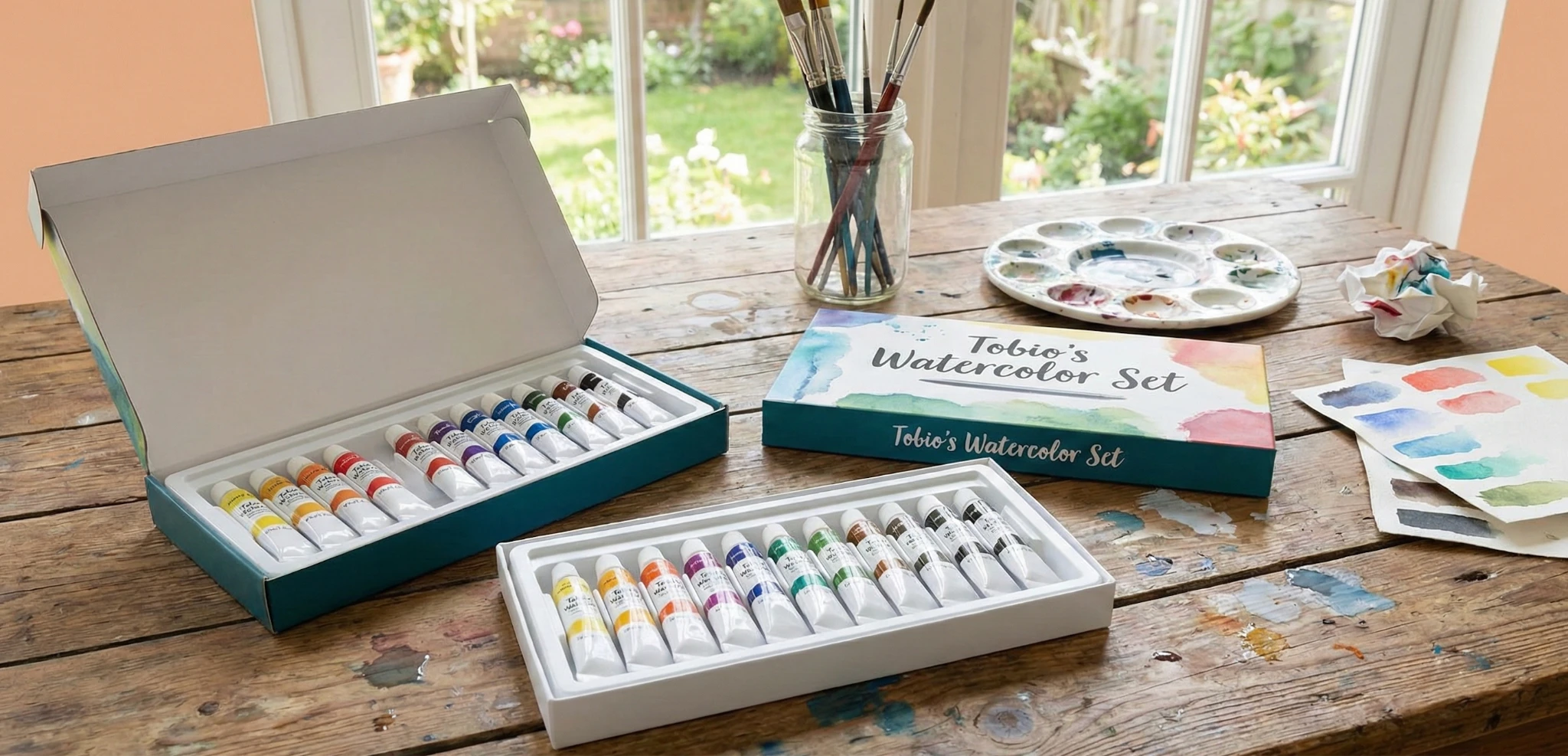
Tobios Kits has become particularly popular among UK artists for their well-designed portable watercolor system. The kit includes professional-quality watercolor paints available in both standard and pastel color ranges, an integrated water brush, and proper watercolor paper in a compact wooden case that fits easily in any bag. The thoughtful design means you’re never missing essential components when inspiration strikes.
What sets quality options apart is pigment concentration and the availability of paint refills at £9 for 12 colors—showing manufacturer commitment to long-term use rather than disposable products. Having both standard and pastel watercolor options available means you can adapt your palette to different subjects: vibrant standards for urban sketching, soft pastels for botanical work or portraits.
Premium Options (£60+)
High-end sets from brands like Daniel Smith or Schmincke offer exceptional pigment quality and expanded colour ranges. These make sense for artists who’ve confirmed watercolor will be an ongoing part of their practice.
Addressing Common Concerns
“I’m Not Good at Painting”
Printmaking itself involves considerable skill development. Approaching watercolor with the same patient, methodical mindset serves you well. Nobody expects perfection immediately – the process itself provides value.
Many successful printmakers were initially intimidated by watercolor, only to discover it complemented their existing skills beautifully. Start with simple exercises: colour swatches, gradient washes, basic shapes. Build complexity gradually, just as you did learning printmaking.
“I Don’t Have Time”
Watercolor’s portability is specifically designed around time constraints. Twenty minutes waiting for a meeting? Paint a quick study. Lunch break? Sketch something nearby. Long train journey? Perfect painting time.
The low setup and cleanup time means you can work in fragments rather than needing hours-long sessions. Many artists find this actually increases their creative output compared to studio-bound media.
“It Won’t Help My Printmaking”
The evidence suggests otherwise. Printmakers who incorporate watercolor consistently report:
- Improved colour sense and mixing ability
- Better compositional skills from rapid sketching
- Expanded subject matter from location work
- Enhanced observational abilities
- Increased overall creative output
Even if watercolor never appears in your finished work, the skills transfer makes the practice valuable.
Getting Started: A Practical Plan
If you’re interested in exploring watercolor as complement to your printmaking practice, here’s a sensible approach:
Week 1-2: Experimentation
Invest in a quality portable kit (mid-range offers best value). Spend this period simply playing with the medium. Try different techniques. Don’t aim for finished pieces – just explore what watercolor can do.
Week 3-4: Skill Building
Focus on fundamental skills: colour mixing, water control, basic washes. Watch a few tutorials (YouTube offers excellent free content). Practice deliberately rather than randomly.
Week 5-6: Practical Application
Start using watercolor for actual print planning. Sketch compositions. Test colour combinations. Begin seeing how watercolor informs your printmaking decisions.
Week 7-8: Integration
By now, you’ll know whether watercolor works for your practice. If it does, integrate it fully. Carry your kit everywhere. Make it habitual. If it doesn’t resonate, you’ve only invested modest time and money in the experiment.
The Future of Mixed Media Practice
Contemporary art increasingly rejects strict medium boundaries. Many successful artists work fluidly between media, letting each project determine appropriate techniques rather than limiting themselves to single disciplines.
Watercolor’s portability and immediacy make it particularly well-suited to this mixed-media approach. It fills gaps that printmaking leaves – spontaneity, portability, rapid experimentation – while complementing printmaking’s strengths in edition work and bold, graphic imagery.
As the art world continues evolving toward more flexible, interdisciplinary practices, combining printmaking with watercolor positions you well for contemporary opportunities.
Final Thoughts
Portable watercolor painting isn’t about abandoning printmaking or suggesting watercolor is “better” in any way. Rather, it’s about expanding your creative toolkit with a complementary medium that enhances your primary practice.
For printmakers, watercolor offers unique advantages: planning tool, portable studio, skill development, and creative outlet between print projects. The investment is minimal – a quality kit costs less than a set of decent lino cutting tools – but the potential impact on your artistic practice is significant.
Whether you’re a lino printer, screen printer, or etcher, consider giving portable watercolor serious exploration. You might discover, as many UK printmakers already have, that this accessible medium becomes an indispensable part of your creative practice.
Have you integrated watercolor into your printmaking practice? Share your experiences in the comments below.
Quality varies significantly between manufacturers. Look for kits with professional-grade pigments, proper watercolor paper, and thoughtful design that genuinely supports working on location. Tobios Kits’ watercolor paint collection offers well-regarded options with both standard and pastel color ranges, plus affordable refills for long-term use.