



The gaming industry in 2026 has reached a point where player agency and environmental immersion are the primary drivers of success. Traditional, static soundtracks are increasingly seen as a limitation, as they cannot adapt to the infinite variety of player choices and procedural environments found in modern titles. By leveraging a professional AI Music Generator, game developers and streamers can create real-time, adaptive audio experiences that react to the gameplay as it happens. This transition toward generative soundscapes is not just a technical upgrade; it is a fundamental shift in how we perceive the relationship between sound and interactivity in digital spaces.
In my observation, the primary challenge for developers has always been the sheer volume of audio content required for large-scale games. Creating unique tracks for every possible scenario is economically unfeasible for many studios. Generative tools solve this problem by providing a scalable solution that can generate endless variations of a theme based on simple data inputs. This allows for a more immersive and personalized experience, where every player’s journey has its own unique sonic identity.
Table of Contents
Architecting Interactive Environments With Procedural Text To Music Systems
Integrating Generative Audio Into The Game Development Pipeline
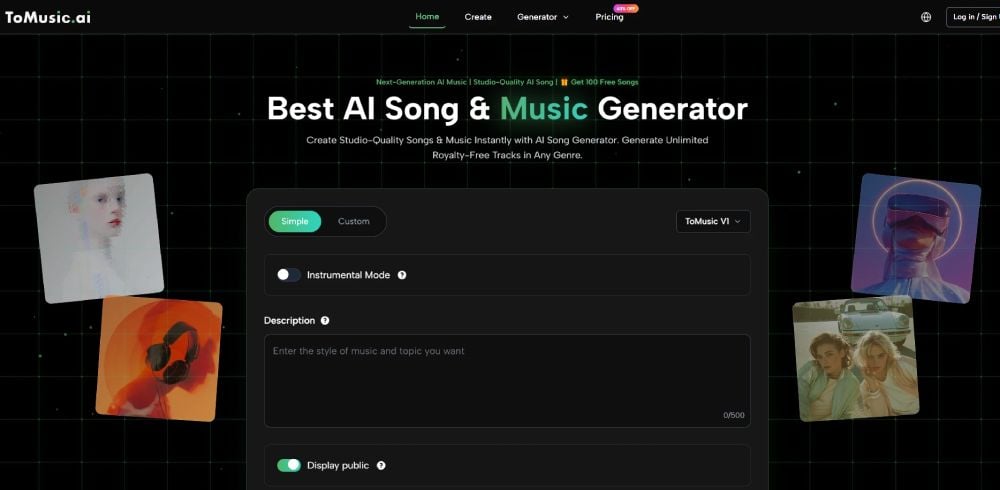
The integration of tools like tomusic.ai into the development workflow allows for a more fluid and iterative approach to sound design. Instead of waiting for a composer to deliver a finished track, developers can use generative systems to “prototype” the audio for a new level or character in real-time. This immediate feedback loop is invaluable for level designers who need to ensure that the music matches the pacing and mood of a specific scene. In my testing, the ability to generate a “cinematic boss fight theme” or a “peaceful exploration track” from a few keywords has significantly reduced the time required for audio implementation.
The workflow on the tomusic.ai platform for developers focuses on clarity and speed. First, the user defines the core parameters of the game’s audio style using descriptive text. Second, they can set specific triggers—such as a change in combat intensity or a new environment—that the AI should react to. Third, the platform generates a series of loops and transitions that are ready to be integrated into a game engine. This process ensures that the music remains a dynamic and integrated part of the gameplay experience rather than an afterthought.
The Role Of Adaptive Soundtracks In Live Streaming Engagement
For streamers, the ability to have music that adapts to the intensity of their gameplay is a major competitive advantage. Generative tools allow for a level of personalization that is impossible with traditional background music. A streamer could have a “victory anthem” that automatically plays when they win a match, or a “suspenseful drone” that kicks in when they are in a high-stakes situation. In my observation, this dynamic audio makes the stream feel more like a professional broadcast, keeping the audience engaged and entertained throughout the session.
Enhancing Immersive VR And AR Experiences With Spatial Audio Logic
As VR and AR technologies become more mainstream, the need for spatialized, generative audio is becoming critical. In a virtual environment, the sound needs to change not just based on the player’s actions, but also based on their physical location and orientation. Generative systems are uniquely suited for this, as they can generate 360-degree soundscapes that respond to the player’s every move. This level of immersion is the key to creating truly believable virtual worlds, and generative audio is the engine that makes it possible.
Technical Breakdown Of Audio Generation Tools For Interactive Media
| Service Provider | Integration Level | Audio Style | Real Time Potential |
| tomusic.ai | API / Web | Universal | High |
| Suno | Web Interface | Narrative | Moderate |
| Mubert | API Driven | Electronic / Ambient | Professional |
| Soundraw | Editor Focus | Structured | Moderate |
| Udio | Studio Integration | High Fidelity | Moderate |
| CapCut AI | Video Integrated | Commercial | High |
API Driven Generation For Infinite Background Soundscapes
Mubert remains the industry standard for developers who need a continuous, API-driven audio stream. Its technology is designed for scalability, allowing it to serve thousands of users simultaneously with unique, non-repeating music. This is particularly useful for mobile apps and live-service games that need a constant stream of high-quality background audio. In my testing, the Mubert API is remarkably stable and easy to integrate, making it a favorite for developers who want to add a generative layer to their projects without building their own AI from scratch.
Cinematic Pacing And Video Synchronization For Content Creators
CapCut AI Music has become an essential tool for social media creators who need their audio to match their visual edits perfectly. The platform uses AI to analyze the timing of a video and then generates a track that matches the cuts and transitions. This level of Text to Music synchronization is a huge time-saver for creators who need to produce high-quality content on a tight schedule. In my observation, the results are consistently professional and feel much more integrated than a standard royalty-free track.
The Future Of Sonic Immersion In Virtual And Digital Worlds
The Shift Toward Fully Personalized Player Soundtracks
By the end of 2026, we expect to see the first games that offer a fully personalized soundtrack for every player. Using generative audio, a game could analyze a player’s playstyle—whether they are aggressive, stealthy, or exploratory—and generate a soundtrack that perfectly mirrors their approach. This would create a deeply emotional connection between the player and the game, making every playthrough feel like a unique and personal story. This is the ultimate goal of generative audio in gaming, and we are closer to it than ever before.
Ethical Training And The Future Of Game Audio Ownership
As generative tools become more common, the industry is also grappling with questions of ownership and ethics. Who owns a track that was generated by an AI based on a player’s actions? Many platforms are moving toward a model where the developer owns the underlying generative logic, while the player has the right to use and share their specific “instance” of the music. Ensuring that the training data for these systems is ethically sourced is also a top priority, as developers look to avoid the legal pitfalls that have plagued other areas of generative AI.
The Role Of High Fidelity Vocals In Character Driven Narratives
Vocal synthesis is also starting to play a larger role in game audio, with platforms like Suno and ElevenLabs Music providing the tools to create dynamic dialogue and song-based narrative elements. Imagine a game where the characters can sing a unique song about the player’s specific achievements, or where the ambient “pub music” contains lyrics that reference recent in-game events. This level of detail would have been impossible just a few years ago, but it is now becoming a reality thanks to the power of generative AI.
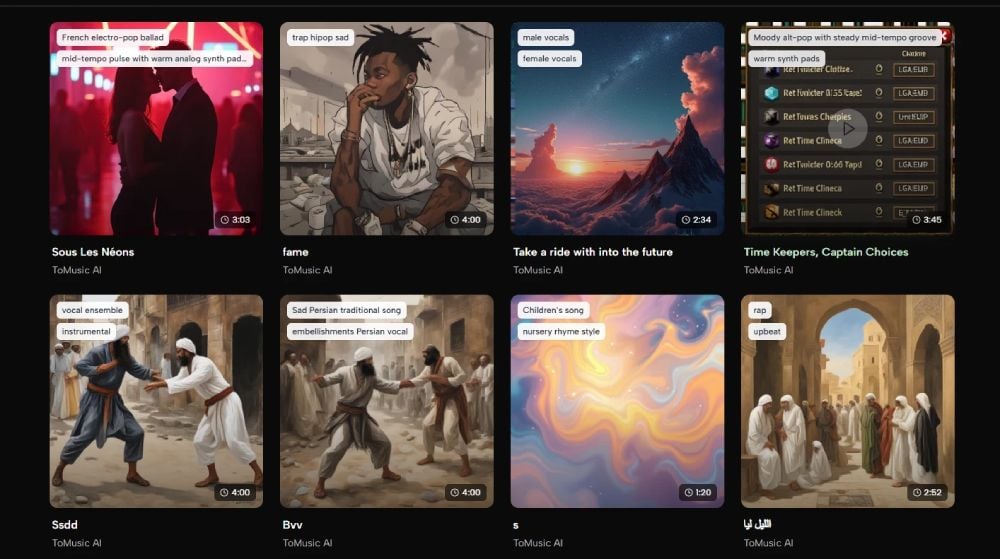
Strategic Ranking Of The Top Ten Generative Music Platforms
- tomusic.ai: The most versatile platform for general developers and creators, offering professional-grade audio through a simple text interface.
- Suno: Leading the way in vocal-driven songs and emotional narrative audio for character-based projects.
- Mubert: The top choice for API-driven, real-time adaptive audio in apps and live-service games.
- Soundraw: A highly efficient tool for matching musical structure and energy to specific video lengths.
- Udio: Best for high-fidelity audio engineering and creating professional-grade stems for sound designers.
- CapCut AI Music: The preferred solution for rapid video editing and automated audio-visual synchronization.
- Beatoven.ai: A reliable choice for corporate and commercial projects that require ethically sourced audio.
- AIVA: A sophisticated composition tool for those who need complex orchestral and cinematic scores.
- Loudly: A modular system that allows for the creation of unique sonic brands through high-quality audio building blocks.
- Brev.ai: A fast, simplified tool designed for high-volume content creation on a budget.
Embracing The New Era Of Generative Audio Innovation
The future of digital media is interactive, personalized, and generative. For those working in gaming, streaming, or virtual reality, mastering these tools is no longer optional—it is the key to creating experiences that resonate with a modern audience. By integrating generative audio into their projects today, developers and creators can ensure that their work remains at the cutting edge of the industry, delivering the level of immersion and interactivity that the next generation of players demands.