Printmaking Rollers & Brayers
Shop printmaking rollers and brayers for relief printing, linocut, woodcut and other compatible block and plate techniques. Compare hard and soft rubber ink rollers by working width, diameter and Shore hardness, from compact rollers for small colour areas to wider models for larger surfaces. Check each roller’s material and ink compatibility for your printing method.
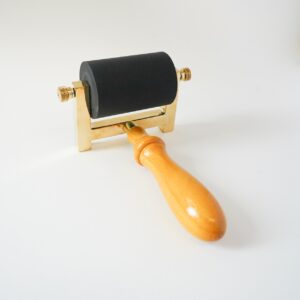

Essdee – Red Standard Printing Ink Rollers – 75mm
Original price was: $9.43.$8.73Current price is: $8.73.

Essdee – Black Professional Lino Printing Ink Rollers – 300mm
Original price was: $32.91.$30.81Current price is: $30.81.
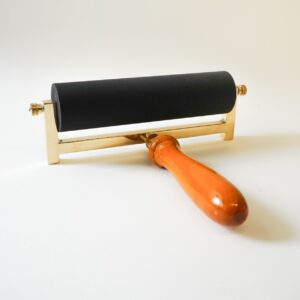

Essdee – Red Standard Printing Ink Rollers – 150mm
Original price was: $12.06.$11.31Current price is: $11.31.
Choosing a printmaking roller or brayer
Start with the surface you are inking and the size of the colour area. Then compare the roller’s width, diameter, hardness and handling. The same roller can suit more than one printmaking method, but not every rubber or ink combination is interchangeable.
Working width: small areas or broad coverage?
- Compact rollers, roughly 38–75mm: useful for small blocks, selective inking and keeping separate colours within smaller areas.
- Medium widths, roughly 100–150mm: worth considering for a general-purpose setup where you print a mixture of small and medium-sized images.
- Wider rollers, roughly 200–300mm: can cover broader areas in fewer passes, provided your inking slab and workspace are large enough.
Compare the actual working width, not the overall frame size. A roller does not have to cover the whole block in one pass: overlapping light passes can work well. Choose a width you can control comfortably, and allow space to roll out an even ink film on your slab.
Diameter is a separate measurement
Width measures across the roller; diameter measures through the rubber cylinder. For example, a roller described as 200mm wide with a 50mm diameter has a 200mm inking width. Its 50mm cylinder travels approximately 157mm in one complete turn. Diameter affects how often the same part of the roller surface returns to the block, so compare it separately from width when assessing coverage and handling.
Shore hardness: compare the numbers, not just “soft” or “hard”
On the same Shore scale, a lower number means softer rubber and a higher number means firmer rubber. The current range includes these examples:
- 30 Shore: Lawrence Artist rubber rollers.
- 40–42 durometer: Speedball Soft Rubber brayers, as specified in their product listings.
- 60 Shore: Japanese rubber rollers and Essdee Black Professional rollers.
- 70 Shore: Essdee Red Standard rollers.
Check the stated scale when comparing different makers. Hardness alone does not determine the result: rubber formulation, thickness, diameter, pressure and ink film also matter. Use the product specification rather than assuming that two rollers marketed as “soft” will feel alike. Our roller guide explains Shore hardness and its effect on ink transfer.
Weight, balance and comfort
Consider the weight you will lift and control repeatedly, especially for longer sessions or shared workshops. A larger cylinder and substantial frame can change the balance in your hand. Heavier does not automatically mean better coverage, and extra downward force is not a substitute for correct inking.
Check whether a listed weight describes the roller itself or its packaged shipping weight. Where the product weight is not stated, ask us about the model rather than estimating from its width. Handle shape, clearance above the slab and whether the roller turns freely are useful checks too.
Match the roller to your ink and printing method
Check suitability for your relief ink, monoprinting medium or other intended use. A fabric block-printing formula may need a particular roller surface, while rubber compatibility also matters when selecting cleaners. Follow the roller and ink manufacturers’ instructions rather than assuming a general ink roller suits every process.
Get consistent results and protect the surface
Roll out a thin, even film and build coverage with controlled passes. Clean the roller promptly using the approved method, dry it before storage and avoid leaving its rubber surface resting under weight. Use its stand or hanging provision where supplied to help prevent flat spots.
For a fuller explanation, read Printmaking Rollers & Brayers: 12 Things to Know About Shore Hardness, Size and Choosing the Right Roller. Pair your roller with suitable printmaking inks, and use our block-inking tutorial for practical application advice.